Contact Form

Name

Email *

Message *

Tuesday, 27 December 2022

TSMC starts 3nm chip production in Taiwan. Here’s why this is a big deal for Apple and other smartphone makers

TSMC has announced that they have started manufacturing 3nm chips in their facilities in Taiwan. Earlier this month, the chip manufacturing giant and Apple CEO Tim Cook introduced its upcoming chip plant earlier this month in Arizona, which will also use the new manufacturing node. 

TSMC starts 3nm chip production in Taiwan. Here’s why this is a big deal for Apple and other smartphone makers

According to Focus Taiwan, TSMC is hosting a party today to honour the beginning of 3nm process chip mass manufacturing in Taiwan. The company’s “Fab 18” factory, located in Tainan’s Southern Taiwan Science Park, will begin producing the newest and most advanced chip yet. 

Analysts have commented that a celebration of this sort is a little odd, given Taiwan’s culture and that of TSMC as well. However, think the company is hoping it helps with concerns about its recent investments in the US. Those plans more than tripled recently from $12 billion to $40 billion for its Arizona facilities.

The idea is, the celebrations will allay all fears of TSMC leaving Taiwan and setting up base in the US permanently. Ever since Joe Biden’s administration roped in TSMC to set up a production plan in the US, investors in Taiwan as well as Taiwanese authorities have been worried that TSMC may do most of their crucial designing in the US. 

With the ceremony, TSMC hopes to publicize its intention to keep using Taiwan as the major hub where its engineers do all the research, development and critical production, despite its overseas investments.

TSMC beginning to produce 3nm chips is particularly significant for Apple, and a number of other smartphone manufacturers. Apple currently calls its A16 a 4nm chip, although TSMC really considers it an enhanced 5nm chip. The first 3nm chips to arrive in Apple products are expected to be Macs with the M2 Pro and Max in 2023. The new manufacturing node will bring massive power efficiency and a whole lot of more performance in the upcoming Macs with the M2 Pro and M2 Max in 2023.

TSMC’s Arizona plants will eventually produce 3nm chips as well (after starting with 4nm), but the company’s Taiwan plants are expected to produce the leading-edge tech first. 2nm mass production is expected to start as soon as 2025.


from Firstpost Tech Latest News https://ift.tt/sCukSej

Apple ordered to pay $98 million in back taxes to Japan, set to be fined for improper declarations

Apple’s Japanese arm is being charged 13 billion yen ($98 million) in retro taxes for bulk sales of iPhones and a number of other Apple devices to foreign tourists that were incorrectly exempted from the consumption tax that is levied when customers buy and use the device in Japan, according to an article in The Nikkei, the world’s largest financial newspaper.

Apple ordered to pay $98 million in back taxes to Japan, set to be fined for improper declarations

Citing unidentified sources, the Nikkei reported on Tuesday that bulk purchases of iPhones by foreign shoppers were discovered at some Apple stores with at least one transaction involving an individual buying hundreds of handsets at once.

Japan permits visitors who are staying for less than six months in the country to purchase goods without paying the 10 per cent consumption tax that is levied on all items. However, this exemption does not apply to purchases made with the intention of reselling them.

Nikkei reports that Apple Japan is said to have submitted an altered tax return to hide the fact that customers were buying iPhones and other Apple products in bulk, which were then being sent abroad. 

Apple has often been accused of playing across blurred lines in its pursuit of avoiding paying taxes and has often done things in a convoluted manner to show that its profits have been minimal. 

Apple may also be fined for the irregularities that led to the discovery of this massive tax evasion tactic. Although to the extent to which Apple may be fined, remains to be seen. In response to this latest tax liability that has been imposed on Apple, the company has stopped selling tax exempted goods in their stores, meaning that even genuine tourists who purchase devices from the story need to pay the 10 per cent consumption tax.

Apple’s Chief Executive Officer, Tim Cook visited Japan earlier this month and announced that the company had invested more than $100 billion in its Japanese supply network over the last five years.


from Firstpost Tech Latest News https://ift.tt/qpV6bMk

Best phones under Rs 75,000 (Dec 2022): Google Pixel 7 Pro, Apple iPhone 13 to Samsung Galaxy S22 5G

If you are looking for a flagship phone with top-of-the-line cameras, ample processing power and storage under Rs 75,000, you have come to the right place. Given the generous budget, you get a lot of options to choose from, and the choice is indeed difficult. After a lot of deliberation, we have shortlisted five smartphones that we believe are the best under 75K this month. Take your pick.

Best phones to buy under Rs 75,000 in India

Google Pixel 7 Pro
While the Google flagship smartphone is officially priced at Rs 84,999 in India, it is possible to get it just under 75K. The Pixel 7 Pro is available on Amazon India for Rs 74,999. But given that Flipkart is the official retail partner, a better option would be to use a HDFC card on the platform and get an instant discount of 10K on the phone. The Pixel 7 Pro is powered by Google’s next-gen Tensor G2 processor and offers 12 GB RAM and 128 GB internal storage. It sports a 6.7-inch QHD+ AMOLED display with 120 Hz refresh rate and 1500 nits peak brightness. The HDR10+ compliant screen is protected by Corning Gorilla Glass Victus. 
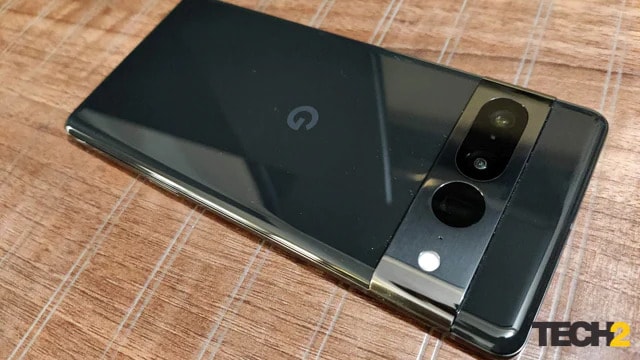
Google Pixel 7 Pro

The phone sports a premium design and has IP68 rated ingress protection. You get the best Android 13 experience around on this device, thanks to the purest version of Android with the Material You design language. As expected, the Google Pixel 7 Pro is great at photography courtesy of three cameras at the back. You get a 50MP primary camera with OIS, a 48MP telephoto camera with OIS for up to 5X optical zoom and a 12MP ultra-wide camera with auto-focus that doubles up as a macro camera too. They do a great job in different lighting and modes. The 10.8MP front camera won’t disappoint the selfie enthusiasts either.

Google Pixel 7 Pro price in India: Rs 74,999 for 12GB RAM/128GB storage

Apple iPhone 13
The Apple iPhone 13 may not be available at the price it was selling for in the festive sales this year, but it has seen a permanent price cut since the arrival of the iPhone 14 series. And frankly, there’s hardly any difference between the iPhone 13 and iPhone 14 (non-Pro) models, so why spend extra on the latter? The 256 GB variant of the Apple iPhone 13 can be purchased under 70K. The phone feels great in hand due to its compact size, and is rugged with an IP68 rating for dust and fluid resistance. It launched with iOS 15, and is upgradable to iOS 16, with more OS updates to follow over the years. 
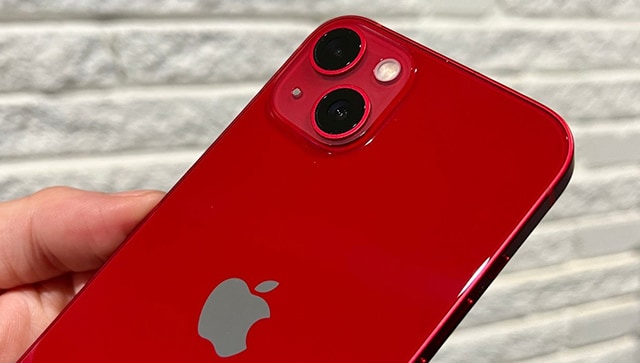
iphone-13-and-iphone-13-mini-to-be-made-in-india1

The Apple iPhone 13 has a  6.1-inch Super Retina XDR OLED display with a resolution of 2532 x 1170 pixels, and is compliant with HDR10 and Dolby Vision. At its core is Apple’s previous flagship A15 Bionic chip that powers even the iPhone 14. There are two 12MP cameras at the back with the primary lens offering optical image stabilisation, and the secondary capable of capturing ultra-wide shots. The performance in photography and videography is excellent, as one expects from all iPhones. 

Apple iPhone 13 price in India: Rs 69,990 for 256GB storage

Samsung Galaxy S22 5G
The 8 GB RAM and 256 GB storage variant of the Samsung Galaxy S22 5G can be purchased for a little over 60K at the moment. Just like the iPhone 13, this phone too is quite compact and has IP68 rated dust and fluid resistance. The phone sports an aluminium frame and has Corning Gorilla Glass Victus+ at the front and back. It has a 6.1-inch Full HD+ Dynamic AMOLED 2X display with a peak brightness of 1300 nits, HDR10+ compliance and 120 Hz refresh rate. 
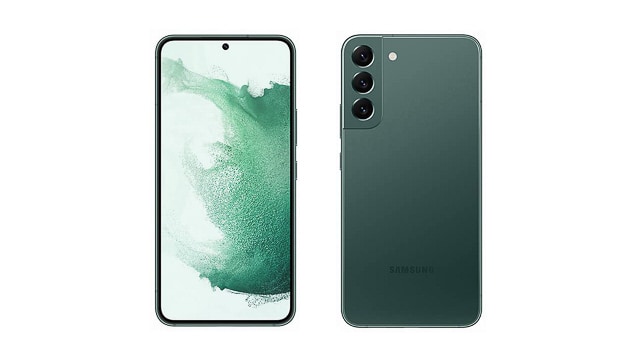
Samsung-Galaxy-S22

The Samsung Galaxy S22 5G is powered by Qualcomm’s flagship grade Snapdragon 8 Gen 1 SoC. Photography department comprises three cameras at the back starting with a 50MP primary camera with dual pixel PDAF and OIS, a 12MP ultra-wide camera with Super Steady video support and a 10MP telephoto camera with OIS for 3X optical zoom. The camera performance is among the best in business currently, and it can record videos in 8K resolution. The phone runs Android 12 with Samsung’s One UI 4.1, and one can expect more OS updates periodically.

Samsung Galaxy S22 5G price in India: Rs 60,990 for 8GB RAM/256GB storage

iQOO 9 Pro 5G
Here’s another impressive offering, this time from the Vivo sub-brand. Just like the S22, the iQOO 9 Pro 5G is powered by Qualcomm’s Snapdragon 8 Gen 1 chip, and you get either 8 GB or 12 GB RAM with 256 GB internal storage; the former offers better value given the 5K price difference. The phone has a sharp 6.78-inch HDR10+ compliant AMOLED display with 3200 x 1440 pixels resolution, 120 Hz refresh rate and the capability of displaying over a billion colour shades. The phone runs Android 12 with FunTouch OS 12. 
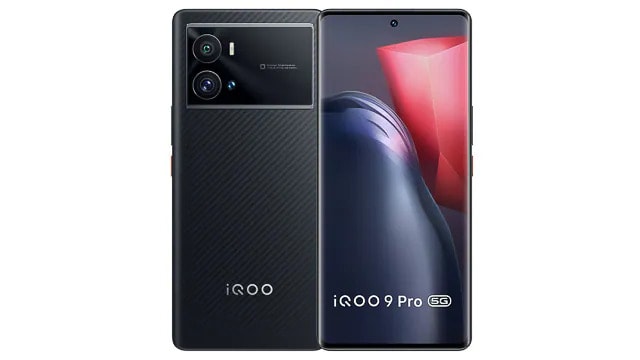
iQOO 9 Pro 5G

The rear camera department here is quite versatile too. You get a 50MP primary camera with Gimbal OIS, accompanied by another 50MP ultra-wide camera with auto-focus and 150-degrees FOV. And lastly, there’s a 16MP telephoto camera with OIS that facilitates 2.5X optical zoom. The 16MP front camera does a good job with selfies and video calls. The iQOO 9 Pro 5G’s 4700 mAh battery can last over a day of moderate use, and the bundled 120W fast charger claims to charge it fully in just 20 minutes. It supports 50W fast wireless charging too.

iQOO 9 Pro 5G price in India: Rs 59,990 for 8GB RAM/256GB storage; Rs 64,990 for 12GB RAM/256GB storage

Motorola Edge 30 Ultra
This phone from our sub-60K list can hold its own in this budget too, courtesy of its powerful hardware and impressive feature list. The Motorola Edge 30 Ultra is powered by Qualcomm’s Snapdragon 8+ Gen 1 chip and is accompanied by 12 GB RAM and 256 GB internal storage. You get a 6.67-inch Full HD+ 10-bit P-OLED display with a 144 Hz refresh rate and 1250 nits peak brightness. The HDR10+ compliant display is protected against scratches by a layer of Corning Gorilla Glass 5. The phone runs Android 12, and like all Motorola phones, you get a near-stock user interface. Expect an Android 13 update soon.
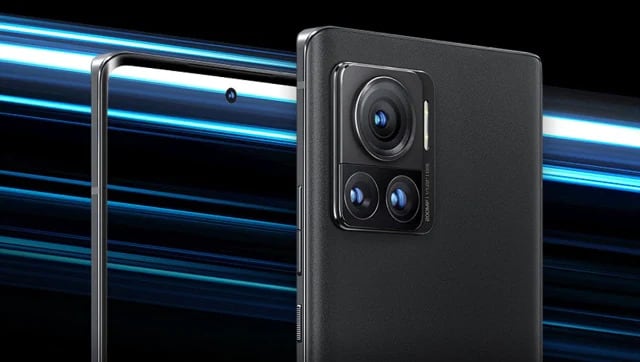
Motorola Edge 30 Ultra

Other than the processing muscle, the camera department is quite potent here. You get a 200MP primary camera with OIS, a 50MP ultra-wide shooter and a 12MP telephoto camera for 2X optical zoom. Thus, you have all the key bases covered as you would expect from a flagship phone. And there’s more! You also get a 60MP front camera to appeal to the selfie crowd. The Motorola Edge 30 Ultra’s 4610 mAh battery keeps it powered for over a day of moderate use, and supports 125 Watts wired and 50 Watts wireless fast charging. 

Motorola Edge 30 Ultra price in India: Rs 59,999 for 12GB RAM/256GB storage


from Firstpost Tech Latest News https://ift.tt/7WMfgDw

China's smartphone shipments fall by 27 per cent prompting fears of massive recession amid COVID outbreak

According to the most recent official data released by the Chinese government, smartphone sales in the country fell 22 per cent in the first 10 months of the year as a result of waning domestic demand and unrest in the country’s manufacturing supply chain. China also happens to be the world’s largest smartphone market. In October 2022 alone, the shipment of smartphones for domestic sale dropped by 27.2 per cent, compared to October 2021.

China's smartphone shipments fall by 27 per cent, prompting fears of worsening recession amid COVID outbreak

According to a report released on Monday by the China Academy of Information and Communications Technology (CAICT), a scientific research centre under the Ministry of Industry and Information Technology, there were 214.5 million smartphones shipped to the nation overall from January to October of this year, down from 275.3 million units during the same period last year.

The slow demand for smartphones in China is evident in the most recent CAICT numbers, as more customers are putting off new purchases due to the weakening home economy and stringent mobility limitations imposed by Beijing’s zero-COVID-19 policy. Although it is expected that the industry will bounce back and that demand will increase, the extent of the increase in demand is hard to determine.

Even though the Chinese government has relaxed its zero-COVID-19 policy, China is set to be ambushed by one of the worst COVID-19 outbreaks as reports of hospitals and China’s medical system coming to its knees, are surfacing day after day.

While consumer confidence and the economy in China would take time to recover,

The decrease in the country’s smartphone market is expected to level out and rise back up to normal starting next year. A complete comeback is projected to occur in 2024, according to a report released earlier this month by tech research firm IDC. 

Slowing consumer demand has already prompted major smartphone manufacturers to curtail their spending. Xiaomi, for example, conducted a new round of layoffs, which saw them terminate nearly 10 per cent of its workforce. Apart from the recent firing, Xiaomi had cut more than 900 jobs earlier this year.

According to figures issued by the National Bureau of Statistics, China’s retail sales plunged in November, down 5.9 per cent from a year earlier. This number fell short of forecasts, dropping from -0.5 per cent in October to the lowest reading since plunging to -6.7 per cent in May and -11.1 per cent in April.

Even Apple has been scrambling to fix problems in its manufacturing supply chain on the mainland. Production of its popular iPhone 14 Pro models at Foxconn Technology Group’s plant in Zhengzhou, the capital of central Henan province, has been hit by severe disruptions including worker protests that turned violent and the exodus of tens of thousands of employees because of a COVID-19 outbreak at the facility.

Apple’s production troubles in China caused the company to supply 20 per cent fewer handsets during the holiday season than what was initially anticipated.


from Firstpost Tech Latest News https://ift.tt/lvtqcjx

Personal Twitter data of Sundar Pichai, India’s MIB and 40 crore other users up for sale on dark web

As per a recently published report by Hudson Rock, an Israeli cybersecurity firm, the personal data of about 40 crore Twitter users is up for sale on the dark web. These accounts also include many legitimate bot accounts that track and update a number of things.

Personal Twitter data of Sundar Pichai, India’s MIB and 40 crore other users up for sale on dark web

More importantly, the personal details of Twitter accounts that are up for sale include accounts of business figures, politicians, and government entities.

What is the Dark Web?
The internet that is hidden from standard search engines and cannot be accessed using regular browsers is known as the “dark web.” Basically, the dark web is a subsection of the global network that is beyond what we know as the internet. 

The “surface web” is the portion of the internet that we often access through URLs or search engines like Google or Yahoo, while the “deep web” refers to the unindexed, unsearchable websites and material that is beyond their purview. A portion of the deep web is the dark web.

Even if it’s not always the case, dark web usage for illegal activities is common.

A URL in a typical browser like Google Chrome or Mozilla Firefox cannot reach the dark web. Additionally, regular search engines also cannot access it.

This is so that search engines may “index” any “regular” websites that want to be visited by visitors in general. Websites that are purposefully difficult to find are not indexed and must be searched for using specialised software like the Tor browser.

How big is the cache of personal data that is up for sale?
“At this stage it is not possible to fully verify that there are indeed 400,000,000 users in the database. From an independent verification the data itself appears to be legitimate and we will follow up with any developments,” says Hudson Rock.

According to Hudson Rock, the threat actor who is selling the data acquired the data in early 2022. The personal details that is up for sale, include the phone numbers and emails of the users. The cybersecurity firm shared a screenshot of a chunk of the data.

Who are some of the known personalities whose data was stolen?
As per the screenshot that was shared, we get to see that the details of quite a few well know public figure was available on the dark web. These include the personal details of Google CEO Sundar Pichai, US Congressperson Alexandria Ocasio-Cortez, Donald Trump’s son Donald Trump Jr, and the Indian Ministry of Information and Broadcasting. The list also includes details of former President of the United States, Donald Trump.

Some of the other well-known accounts whose data has been put up on the dark web are, the US Department of Interior, the French Ministry of Justice, the World Health Organization, SpaceX, Scott Morrison, former Australian Prime Minister, actor Cara Delevigne, and British TV personality and broadcaster Piers Morgan.

Hacker tried to extort Elon Musk
Hudson Rock says the data was accessed in early 2022 and the seller has attempted to extort Twitter’s owner Elon Musk.

“In the post, the threat actor claims the data was obtained in early 2022 due to a vulnerability in Twitter, as well as attempting to extort Elon Musk to buy the data or face GDPR lawsuits,” reports Hudson Rock.


from Firstpost Tech Latest News https://ift.tt/xUGjWER

Monday, 26 December 2022

Top picks from MSI’s year-end sale: MSI Alpha 15 and Bravo 15 gaming laptops

The MSI Bravo 15 and Alpha 15 — an entry-level gaming and a mid-range laptop respectively — are easily the best in their class and perfect for students and working professionals alike, and are our top picks from MSI’s Year-End sale.

The Bravo 15, available at Rs 49,990 during the sale, is a laptop I’d heartily recommend to first-time gamers and students. It comes with an AMD Ryzen 5 5600H CPU, RX5500M GPU with 4 GB VRAM, 8 GB of DDR4 RAM, and 512 GB of NVMe storage. The display is a fast, 15.6-inch FHD panel with a 144 Hz refresh and “IPS-level” viewing angles.

What makes this laptop special is the sheer value on offer here. The Ryzen 5 5600H is a 6-core CPU and a great all-rounder when it comes to general productivity and gaming. With 4 GB of VRAM, the RX5500M is perfect for the first-time gamer and student, allowing you to enjoy popular multiplayer games like CS: GO and Valorant at well over 60 FPS.

The Alpha 15, on the other hand, is a significant step up, both in price and performance, and is meant for a more serious category of gamer.

The price goes up to Rs 85k after discount, but so do the specs. You get bumped up to a far more powerful Ryzen 7 5800H CPU, and more importantly, an RX6600M GPU with 8 GB of GDDR6 VRAM! This model also comes with 8 GB of DDR4 RAM and 512 GB of high-speed, NVMe storage, which is great for FHD gaming, especially on the fast, 15.6-inch 144 Hz FHD panel that’s included.

The additional performance, better display, not to mention the larger battery, makes the Alpha 15 an excellent choice for gamers, streamers, and content creators alike.

Since these are both AMD-powered machines, they both support features like AI-powered noise-cancelling, hardware accelerated streaming, FidelityFX Super Resolution, ray-tracing, and more. Additionally, MSI includes MSI Centre, Nahimic, and a virtual crosshair to give you that extra edge when gaming competitively.

Whether you’re a young student looking to finally take the plunge into the world of PC gaming, or someone who is more serious about their games, you can’t go wrong with either of these machines.

Head here to access MSI’s Year-End deals page for the best deal on the laptop of your dreams!

This is a Partnered Post. 


from Firstpost Tech Latest News https://ift.tt/Fx6yDtG

Friday, 23 December 2022

Microsoft tells US court that its $69 billion Activision-Blizzard deal would greatly benefit gamers

During a court proceeding in a case that the US Federal Trade Commission brought against Microsoft for their acquisition of Activision-Blizzard, Microsoft responded in summary to the allegations against them that its $69 billion bid to buy the “Call of Duty” maker would greatly benefit gamers and consumers, irrespective of the ecosystem they are already in.

Microsoft tells US court that its $69 billion Activision-Blizzard deal would greatly benefit gamers

Microsoft made the case in a brief intended to persuade the US Federal Trade Commission’s judge to approve the merger, after FTC commissioners said the transaction would kill competition in the gaming sector in a complaint this month intended to stop the merger.

In a complaint on Dec. 8, the FTC said its concern was that Activision’s popular games, including “World of Warcraft” and “Diablo,” potentially would stop being offered on devices that rival Microsoft’s Xbox. It set a hearing before an administrative law judge for August 2023.

Microsoft President Brad Smith said in mid-December the company had offered to sign a legally-binding consent decree with the FTC to provide “Call of Duty” games to rivals including Sony and others for a decade.

“The acquisition of a single game by the third-place console manufacturer cannot upend a highly competitive industry. That is particularly so when the manufacturer has made clear it will not withhold the game,” Microsoft said in Thursday’s filing.

Smith said in a statement this week he was still confident in the company’s legal case but remained “committed to creative solutions with regulators.”

Activision CEO Bobby Kotick said in a statement on Thursday he believes that the companies will prevail in a legal fight with the trade commission.

The Biden administration has taken a more aggressive approach to antitrust enforcement. The US Department of Justice recently stopped a $2.2 billion merger of Penguin Random House, the world’s largest book publisher, and smaller US rival Simon & Schuster.

The Microsoft deal is also facing scrutiny outside the United States, with the European Union saying it would decide by March 23, 2023, whether to clear or block the deal.


from Firstpost Tech Latest News https://ift.tt/5Cmab1q

Meta agrees to settle Cambridge Analytica lawsuit for a record $725 million

2022 wasn’t a great year for Mark Zuckerberg-led Meta, formerly known as Facebook. In a year which saw them lose some of the platform’s most avid advertisers, as well as an abysmal failure of their star Metaverse project, Horizon Worlds, Meta will now have to pay a record $725 million to settle the class-action lawsuit related to the Cambridge Analytica data harvesting scandal.

Meta agrees to settle Cambridge Analytica lawsuit for a record $725 million

The agreement, which was originally reported by Reuters earlier today, comes after news broke about four months ago that Meta had put up a settlement proposal in the Northern District of California, where the lawsuit was initially brought over four years ago. 

In the following years, Meta has resisted the lawsuit, which combined grievances from other Facebook users, claiming that people who freely joined the social network should have no legitimate expectations of privacy. The judge supervising the case in 2019 termed this argument “so wrong.”

The scandal in question, which is just one of many to have rocked the Facebook world over the years, involves the now-defunct U.K. political consulting firm Cambridge Analytica, which used a survey app called MyDigitalLife to collect data from tens of millions of Facebook users with the intention of using that data to influence voting behaviour through targeted advertisements. Following the privacy controversy, several fines and settlements were reached. 

Meta agreed to pay the Federal Trade Commission (FTC) $5 billion as part of a settlement, the Securities and Exchange Commission (SEC) $100 million for deceiving investors, and the U.K. Information Commissioner’s Office a meagre £500,000 ($600,000).

Although the Cambridge Analytica scandal what set of this class-action lawsuit, it has now been broadened to include other third parties that may have misused Facebook user data.

Mark Zuckerberg, the CEO and co-founder of Meta, had previously testified before Congress about the scandal, but his answers were a little evasive, and aside from a carefully controlled testimony before the EU Parliament shortly after, the upper echelon at Meta have not had to face any more direct questioning on the matter. 

However, because of this pending case, Zuckerberg, Sheryl Sandberg, the current COO, and Javier Olivan, the previous COO, were all scheduled to appear again in court. It’s obvious that Meta didn’t want this to happen, and that it won’t now that an agreement has been struck.

In the filing notifying the court of the proposed settlement, the lawyers conclude that the deal agreed between the plaintiffs and Meta was an “extraordinary outcome,” resulting in the “largest recovery ever achieved in a data privacy class-action and the most Facebook has ever paid” to end a private class-action lawsuit.

While acknowledging no wrongdoing once more as part of the $725 million settlement, Meta said in a statement provided to Reuters that the agreement was “in the best interest of our community and shareholders.” Additionally, the settlement covers every American Facebook user, who will only get a small portion of the settlement fund, if they want to apply.

The settlement has not yet received final approval, although this is anticipated at a subsequent hearing on March 2, 2023.

Washington, D.C. is suing Zuckerberg personally, claiming that he was directly accountable for the mistakes that led to the scandal, so Meta hasn’t heard the last of Cambridge Analytica.


from Firstpost Tech Latest News https://ift.tt/Jz97rf1

TikTok fires four employees for spying on US journalists by illegally accessing internal data 

It seems that TikTok just can’t stay away from controversy. After getting banned from the smartphones of government employees and off of government computers across a bunch of states in the United States, TikTok owner ByteDance today confirmed reports from this fall that claimed some of its employees used the popular app to track multiple journalists. This comes amid strong calls for a boycott and banning of the app by both, Democratic and Republican senators and house representatives.

TikTok fires four employees for spying on US journalists by illegally accessing internal data

A Ney York Times report revealed that ByteDance had fired as many as four employees for illegally accessing TikTok’s internal data and spying on American journalists who were writing on TikTok, ByteDance and the company’s close ties with Beijing.

According to Forbes, some journalists from its own newspaper “were victims in this clandestine monitoring effort.” FT stated that Cristina Criddle, a UK-based Financial Times writer, and a reporter for Buzzfeed were both under surveillance. 

Workers of ByteDance allegedly gained access to reporters’ TikTok accounts to collect IP and user data in order to see whether there was any overlap with pings coming from areas where ByteDance employees were suspected of leaking information. ByteDance admitted that these strategies had spread to the point that staff members were also keeping an eye on some of the journalists’ associates’ data.

According to Forbes, ByteDance fired Chris Lepitak, the chief internal auditor responsible for the company’s Internal Audit and Risk Control department. ByteDance confirmed Lepitak’s team was behind the surveillance campaign. In October, Forbes reported that Lepitak was also seemingly seeking information on the “location and details of the Oracle server that is central to TikTok’s plans to limit foreign access to personal US user data.” 

That server is key to the Biden administration’s ongoing discussions with TikTok over national security concerns, with the US increasingly wary of China-based ByteDance employees gaining access to US-stored data.

Lepitak’s staff “misused their position to get access to TikTok user data” in order to monitor journalists, according to an internal email obtained by Forbes from TikTok General Counsel Erich Andersen.

FT reported that four employees were involved, and Forbes reported that ByteDance fired two employees based in the US and two in China. ByteDance spokesperson Hilary McQuaide echoed Andersen’s email in a statement saying that “the misconduct of certain individuals, who are no longer employed at ByteDance, was an egregious misuse of their authority to obtain access to user data.”


from Firstpost Tech Latest News https://ift.tt/IUXAKB1

Twitter starts showing how many views posts gets, Musk says Tweets read exponentially more than they are liked

Earlier this month Elon Musk had announced that Twitter will soon start showing how many people have viewed a particular, just like YouTube shows the number of times a particular video has been watched. This week, Twitter finally launched the feature for the Twitter app on iOS and Android, and will soon start sharing the numbers on the desktop version as well.

Twitter starts showing how many views posts gets, Musk says Tweets read exponentially more than they are liked

View counters are now displayed in the app along with the amount of comments, retweets, and favourites. Not every tweet will have a visible view count, according to a Twitter FAQ. The information won’t be available for community tweets, tweets from Twitter Circles, or “older” tweets.

“Anyone who views your Tweet counts as a view, regardless of where they see your Tweet (e.g. Home, Search, Profiles, Tweets embedded in articles, etc.) or whether or not they follow you. Even an author looking at their own Tweet counts as a view,” read the blogpost.

It also adds that looking at a tweet from the web, then looking at it on your phone would count as two views.

Musk hinted that he was attempting to make text and picture postings on the site more similar to video posts, which already had public view counts, when he launched the functionality on December 1. Additionally, he stated that it wasn’t enough to only look at answers and likes to get the whole picture, and that it was supposed to demonstrate how “active” the platform is.

He also added recently, that Tweets are read about 100 times more than they are liked, given that 90 per cent of internet users are plain, simple consumers, who just consume what has been served to them, without recording any reactions to the content, not even a like.


Twitter, it seems is going in the completely opposite direction, compared to what other social media platforms are doing. In fact, increasing the amount of information that is accessible to the public on a social network is the opposite of what other businesses have recently been doing. Since years, Instagram and Facebook have been developing the ability to allow users hide the number of likes their posts receive. 

Even YouTube, whose public view counts have been a distinguishing element of the platform, has begun to conceal certain information; in 2021, it concealed public dislike numbers, making it so that only producers could see how many people had pressed the thumbs-down button on their videos.


from Firstpost Tech Latest News https://ift.tt/aGVpu3Z

Google wants its Pixel lineup to resemble Apple’s iPhone lineup by the end of 2025

Google’s plans for its hardware division and how it progresses over the next couple of years somehow got leaked earlier this week.

Google wants its Pixel lineup to resemble Apple’s iPhone lineup by the end of 2025

From the plan, the one thing that was abundantly clear is that Google wants its Pixel lineup to resemble Apple’s iPhone lineup, and plans to achieve this by 2025.

The Pixel Lineup for 2023
Google will have the same sort of a lineup in 2023, as they had in 2022. First, we will get to see the more budget-oriented version of the Pixel 7 series, called the Pixel 7a, codenamed Lynx.

The flagship series will have the Pixel 8 and the Pixel 8 Pro, codenamed Shiba and Husky respectively. We are also likely to see the much anticipated foldable smartphone from Google, called the Pixel Fold. We are also likely to see the revival of the Pixel Tablet, with a pro version as well.

According to Android Authority, the Pixel 8 “will have a smaller display and overall smaller form factor,” while the Pixel 8 Pro remains the same.

The Pixel Lineup for 2024
This is the year in which we will see Google mixing things up. The Google Pixel 8a would have a $499 price tag as part of a $50 pricing hike. Given how much might change with the landscape between now and then, it is preferable to think of it as a target rather than a commitment. Also, whether Google launch the Pixel 8a under that name will depend on how well the Pixel 7a performs. 

Other than the Pixel 8a, we will also see a Pixel 9 and two different Pixel 9 Pros, one with a 6.3-inch display, and one with a 6.7-inch display. This will be Google’s return to the Pixel XL model, under which, the launched two flagship devices, with the same specs and performance, but only differing in screen size. Other specifications of the Pixel 9 Pros should be the same. We should also see the second iteration of the Pixel Fold this year.

The Pixel Lineup for 2024
A flip-style smartphone, like the Galaxy Z Flip, sounds a little more certain according to this 2025 roadmap leak, even though Google may be hesitant on a follow-up to the 2023 Pixel Fold. In light of this, Google is considering a different tactic to imitate the 10 Pro series using merely a smaller and bigger version of the Pixel 10. The iPhone 14, iPhone 14 Plus (which reportedly isn’t selling that well), iPhone 14 Pro, and iPhone 14 Pro Max would all be perfectly compatible with this.

Google made clear that it wanted a “Collection” of gadgets with the Pixel Watch and forthcoming Tablet.


from Firstpost Tech Latest News https://ift.tt/esQ7E4p

Navigating the World of Crypto: Exploring the Potential of Crypto4u

 In recent years, the world of cryptocurrency has undergone a seismic shift, evolving from a niche interest among tech enthusiasts to a glob...