Contact Form

Name

Email *

Message *

Tuesday, 30 March 2021

Godzilla vs Kong: Hollywood has picked a winner, but what does the science say?

By Kiersten Formoso

The 2021 film Godzilla vs Kong pits the two most iconic movie monsters of all time against each other. And fans are now picking sides.

Even the most fantastical creatures have some basis in scientific reality, so the natural world is a good place to look to better understand movie monsters. I study functional morphology – how skeletal and tissue traits allow animals to move – and evolution in extinct animals. I am also a huge fan of monster movies. Ultimately, this is a fight between a giant reptile and a giant primate, and there are relative biological advantages and disadvantages that each would have. The research I do on morphology and biomechanics can tell us a lot about this battle and might help you decide – #TeamGodzilla or #TeamKong?

Larger than life

First it’s important to acknowledge that both Kong and Godzilla are definitely far beyond the realms of biological possibility. This is due to sheer size and the laws of physics. Their hearts couldn’t pump blood to their heads, they would have temperature regulation problems and it would take too long for nerve signals from the brain to reach distant parts of the body – to name just a few issues.

However, let’s assume that somehow Godzilla and Kong are able to overcome these size limitations – perhaps because of their radiation exposure they have distinctive mutations and characteristics. Based on how they look on the big screen, let’s explore the observable differences that might prove useful in a fight.

Kong: the best of ape and man

At first glance, Kong is a colossal primate — but he’s not simply a giant gorilla.

One of the most striking things about Kong is his upright, bipedal stance – he mostly walks on two legs, unlike any other living nonhuman apes. This ability could suggest close evolutionary relationship to the only living upright ape, humans – or his upright stance could be the result of convergent evolution. Either way, like us, Kong has thick muscular legs geared toward walking and running, and large free arms with grasping hands, enabling him to use tools.

Humanity’s bipedal, upright posture is unique in the animal kingdom and provides a slew of biomechanical abilities that Kong might share. For example, human torsos are highly flexible and particularly good at rotation. This feature – in addition to our loose shoulder girdle – makes humans the best throwers in the animal kingdom. Throwing is helpful in a fight, and Kong could probably throw with the best of them.

Kong is also, of course, massive. He absolutely dwarfs the largest known primate, an extinct orangutan relative called Gigantopithecus that was a bit bigger than modern gorillas.

Kong does have many gorillalike attributes as well, including long muscular arms, a short snout with large canine teeth, and a tall sagittal crest – a ridge of bone on his head that would be the anchor point for some exceptionally strong jaw muscles.

Strong, agile, comfortable on land and with the unparalleled ability to use tools and throw, Kong would be a brutal force in a fight.

Also read: Godzilla vs Kong and the future of Kaiju cinema — Why MonsterVerse films herald new direction for the genre

Godzilla: An aquatic lizard to be reckoned with

Godzilla appears to be a giant, semiaquatic reptile. Like Kong, Godzilla has the traits of a few different species.

Recent Godzilla movies show him decently mobile on land, but seemingly much more comfortable in the water despite his lack of overt aquatic features. Interestingly, Godzilla is depicted with gills on his neck – a trait that land vertebrates lost after they emerged from the sea about 370 million years ago. Given Godzilla’s terrestrial features, it’s likely that his species has land-dwelling reptile ancestors and reevolved a mostly aquatic lifestyle – kind of like sea turtles or sea snakes, which can actually absorb oxygen through their skin in water. Godzilla may have uniquely reevolved gills.

Godzilla’s tail is what really separates him from Kong. It is massive, and anchored and moved by huge muscles attached to his legs, hips and lower back. Dinosaurs like Tyrannosaurus rex stood horizontally and used their tails for balance and to help them walk and run. Godzilla, in contrast, stands vertically and keeps his tail low to the ground, probably for a different type of balance. This vertical posture is unique for a two-legged reptile and more resembles a standing kangaroo. Godzilla stands on two muscular, pillarlike legs similar to those of a sauropod dinosaur. These would provide stability and help support his gargantuan mass but would also bolster the strength of his tail.

In addition to his powerful tail, Godzilla carries three rows of sharp spikes going down his back, thick scaly skin, a relatively small head full of carnivorous teeth and free arms with grasping hands, all built onto a muscular body. Taken together, Godzilla is a terrifying and intimidating adversary.

Ready, fight!

So now that we’ve looked a little closer at how Godzilla and Kong are built, let’s imagine who might emerge victorious in battle.

Though Kong is a little bit smaller than Godzilla, both are more or less comparably massive in size and neither has a clear advantage here. So what about their fighting abilities?

Godzilla would likely favor his robust tail for both offense and defense – much like modern-day large lizards that use their strong tails as whips. Scale up that strength to Godzilla’s size, and that tail becomes a lethal weapon – which he has used before.

However, Kong is more comfortable on land, faster and more agile, can use his strong legs to jump, and possesses much stronger arms than Godzilla – Kong probably packs a walloping punch. And as an ape, Kong would also likely use tools to some degree and might even capitalize on his throwing ability.

Both would have a gnarly bite, with Kong likely getting a slight advantage. However, Godzilla’s bite is by no means weak, and all of his teeth are flesh-piercing, similar to crocodile and monitor lizard teeth.

On defense, Godzilla has the edge, with thick scaly skin and sharp spikes. He might even act like a porcupine, turning his back to a rapidly approaching threat. However, Kong’s superior agility on land should be able to offer him some protection as well.

I will admit I am #TeamGodzilla, but it’s very close. I may give a slight edge to Kong in broad terrestrial battle ability, but Godzilla’s general mass, defense and tail would be hard to overpower. And lest we forget, the tipping point for Godzilla is that he has atomic breath! Until researchers find evidence of a dinosaur or animal with something like that, though, I will have to reserve my scientific judgment.

Regardless of who emerges victorious, this battle is one for the ages, and I am excited as both a scientist and monster movie fan.The Conversation

Kiersten Formoso is a PhD Student in Vertebrate Paleomorphology, USC Dornsife College of Letters, Arts and Sciences

This article is republished from The Conversation under a Creative Commons license. Read the original article.


from Firstpost Tech Latest News https://ift.tt/3m22zkK

WHO COVID-19 origins report: Which animals might've passed COVID-19 virus to humans?

First, it was snakes, and then the endangered pangolin before Asian ferret badgers were put in the dock. Scientists have been scrutinising a Noah's Ark of animals to find out whether — and how — the coronavirus was transmitted from bats to humans, with the prime suspect changing from one study to another. Cats, dogs, badgers, lions and tigers have also been in the spotlight — not to mention minks, which have been culled in the millions.

After AFP published findings of a report by experts convened by the World Health Organization (WHO) Monday, here is a recap of the suspects.

Snakes

Scientists were quick to accuse the bat of being the origin from the time the virus emerged in China in late 2019.

A study sponsored by the Chinese Academy of Sciences in January 2020 found that Covid-19 was closely related to a strain that exists in bats, which would be the "native host".

Bats are hosts for many other strains of coronavirus.

But the scientists say that Covid-19 must have passed through another yet-to-be-identified species known as an "intermediate host".

A second study published shortly after in the Journal of Medical Virology fingered snakes as the possible culprit.

The report was immediately brushed aside by other experts who said the guilty party was probably a mammal, as was the case with SARS, which came from the civet, a small nocturnal animal prized in China for its meat.

The pangolin?

Researchers at the South China Agricultural University said in February 2020 the endangered pangolin, a mammal whose scales are used in Chinese medicine may be the "missing link" between bats and humans.

One of over 100 pangolins and 450 kg (992 lb.) of pangolin scales seized by the Thailand customs, estimated to be worth over 2.5 million baht (USD $75,278). Image: AP Photo.

This anteater was one of the wild animals sold at the Huanan market in the central Chinese city of Wuhan, to which most of the first known cases of Covid-19 were linked.

But whether the pangolin is the culprit is not known at this stage.

Cats and dogs vulnerable

A pet dog was quarantined in Hong Kong later that same month after it tested "weak positive" to the virus when its owner was infected.

Cases were then reported in cats.

Ferrets and hamsters have also tested positive, along with tigers and lions in captivity.

Scientists have stressed that domestic animals are vulnerable to the virus but cannot infect humans.

Also read: WHO COVID-19 origins report: Virus may have jumped from bats to humans via second animal; lab leak highly unlikely

Millions of minks culled

Suspicion has also fallen on mink, which are bred for their valuable fur.

In June, the WHO said that Dutch workers apparently infected with the coronavirus by minks could be the first known cases of animal-to-human transmission.

Cases of Covid in mink farms were then detected in several other European Union countries including Denmark, France, Greece, Italy, Lithuania, Spain and Sweden, as well as in the United States.

The mink has been suspected as well. Image credit: Flickr/Deborah Freeman

In July tens of thousands of minks were culled in the Netherlands and a month later hundreds of thousands more followed when the government brought forward a total ban on the industry to the end of the year.

Denmark — which had three times more mink than people — ordered all of the country's 15 to 17 million minks to be culled in November.

Copenhagen warned that the mutation via the mink, dubbed "Cluster 5", could threaten the effectiveness of any future vaccine.

Missing link

A mission of international WHO experts who visited Wuhan had no shortage of suspects, from rabbits to ferret badgers to raccoons and civets.

Their long-awaited report obtained by AFP Monday said it was "likely to very likely" that the virus jumped from bats to humans via an intermediate host, but they were not able to say what that missing link might be.

In fact it was also "possible to likely" that the virus jumped directly from bats, they added.


from Firstpost Tech Latest News https://ift.tt/31to3gP

Poco X3 Pro India launch LIVE Updates: Features a 120 Hz refresh rate FHD+ display with 240 Hz touch sampling rate

12:09 (IST)

The Poco X3 Pro also comes with HDR 10 support and Widewine L1 certification

12:08 (IST)

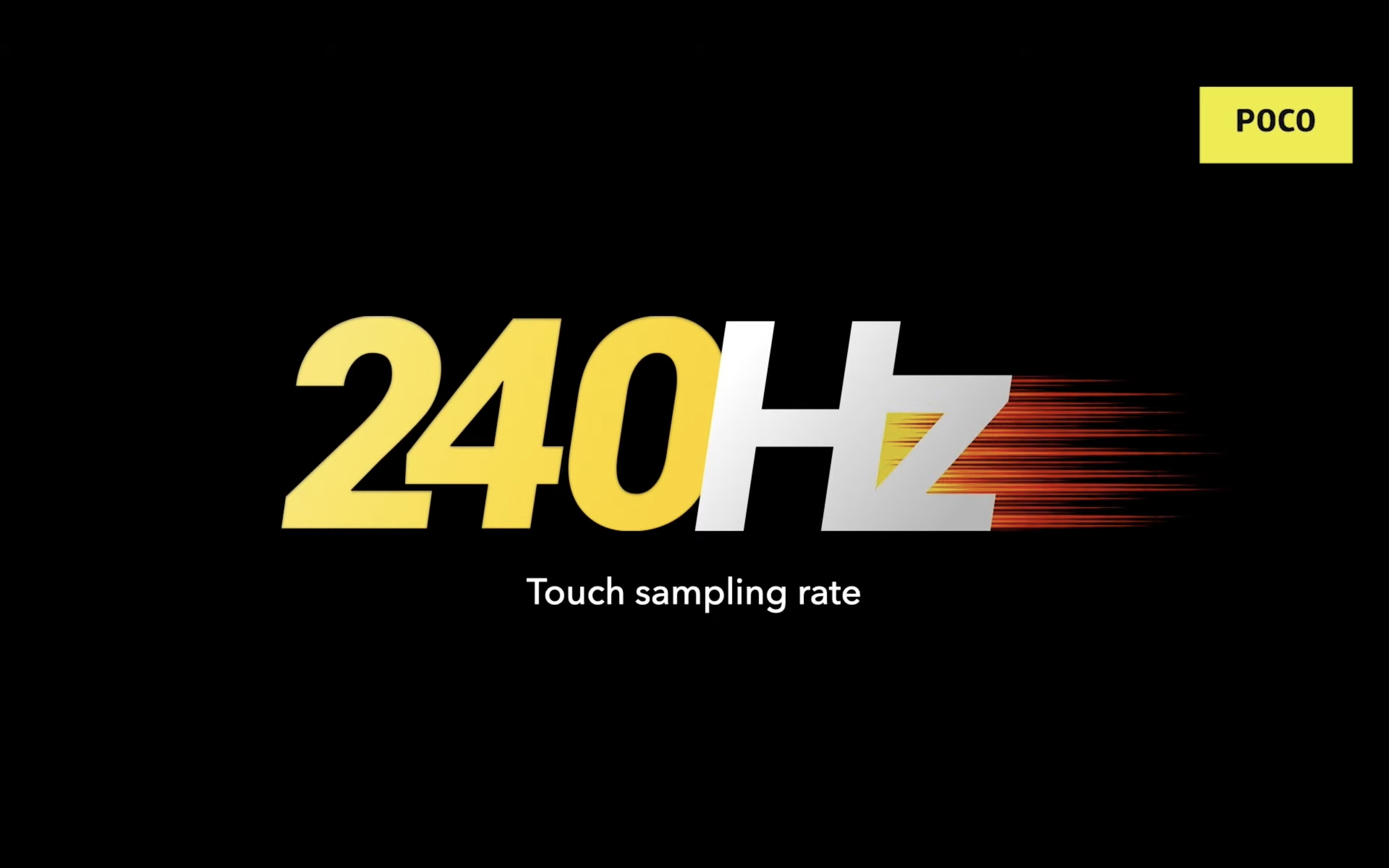
The Poco X3 Pro features a 120 Hz refresh rate FHD+ display with 240 Hz touch sampling rate

12:08 (IST)

The Poco X3 Pro also comes with expandable 1 TB storage

The smartphone supports up to 8 GB RAM

12:06 (IST)

The Poco X3 Pro features UPS 3.1 storage

The UPS 3.1 is supposedly 3x faster than UFS 3.0

12:05 (IST)

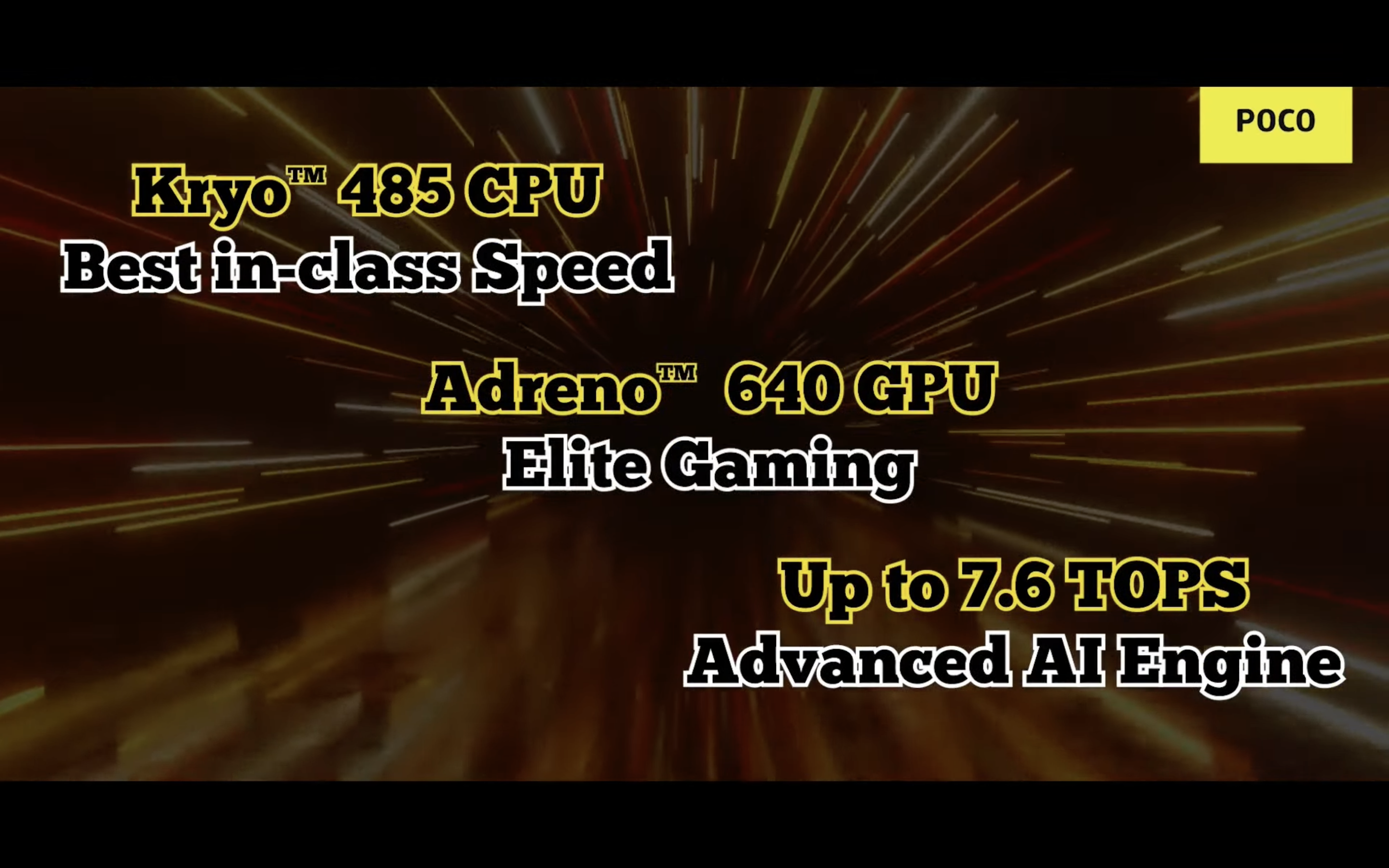
The Poco X3 Pro comes with Adrena 640 GPU

12:05 (IST)

The Poco X3 Pro is powered by Qualcomm Snapdragon 860 SoC

12:03 (IST)

Poco India head Anuj Sharma says all Poco smartphones have hit the million mark

12:01 (IST)

The event is now live...

11:33 (IST)

We also know that the Poco X3 Pro will be powered by Qualcomm Snapdragon 860 SoC

11:31 (IST)

Poco has also confirmed that the Poco X3 Pro will feature a 120 Hz FHD+ display

11:30 (IST)

Poco X3 Pro has been confirmed to sport a 48 MP camera

11:26 (IST)

Poco X3 Pro with Snapdragon 860 SoC to launch today at 12 pm in India: How to watch it live- Technology News, Firstpost

www.firstpost.com

11:14 (IST)

Poco X3 Pro India launch

The launch event for the Poco X3 Pro will begin at 12 pm. Stay tuned for the pricing and all the launch details...

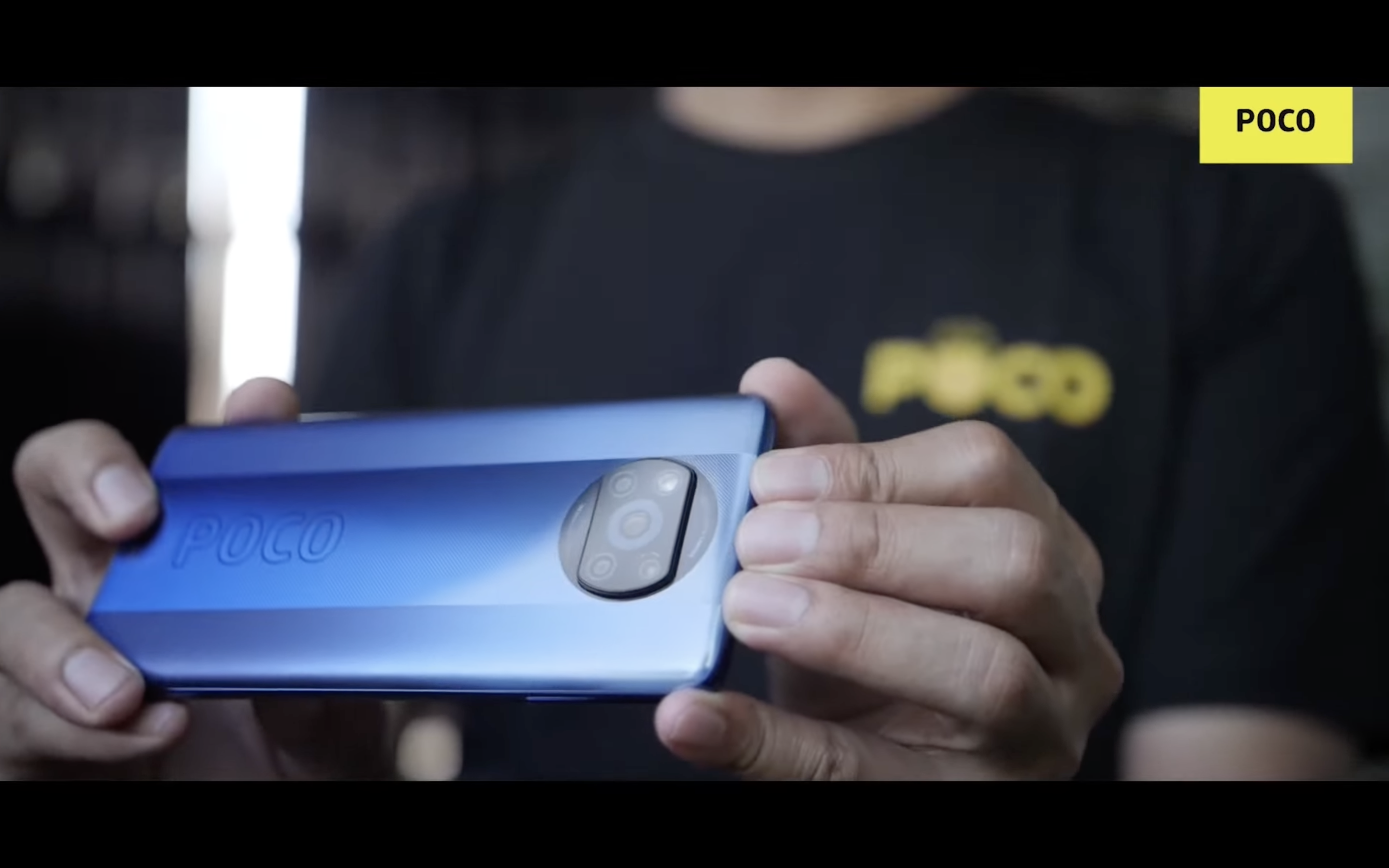
Poco is hosting a launch event in India to unveil the much-awaited Poco X3 Pro smartphone. The Poco X3 Pro has been confirmed to be powered by Qualcomm Snapdragon 860 chipset. We also know that the Poco X3 Pro will feature a circular camera module at the back and will be available a the blue colour option. Reports also suggest that the smartphone will be priced under Rs 20,000. The launch event will kick off at 12 pm and will be streamed LIVE on Poco's official YouTube channel.

Poco X3 Pro expected specifications

Going by the global variant, Poco X3 Pro will feature a 6.67-inch FHD+ DotDisplay that comes with 2,400 x 1,080 pixels resolution and a 120 Hz refresh rate. The smartphone is confirmed to be powered by Snapdragon 860 chipset. It is expected to offer up to 8 GB RAM and up to 256 GB of internal storage.

In terms of camera, Poco X3 Pro is expected to sport a quad camera setup that includes a 48 MP primary sensor, an 8 MP ultra-wide-angle lens, a 2 MP depth sensor and a 2 MP macro lens. For selfies, it might come with a 20 MP  front camera.

Poco X3 Pro is likely to come with a 5,160 mAh battery that supports 33 W fast charging.


from Firstpost Tech Latest News https://ift.tt/3rAAF0c

ISRO strikes partnership with IIST to advance space research similar to NASA-JPL-Caltech model

ISRO is embarking on a mission of a different kind by taking the Indian Institute of Space Science and Technology (IIST) to a much higher, futuristic research orbit. The Bengaluru-headquartered space agency is striking a partnership with the IIST ‒ something similar to the JPL- Caltech model in the United States. JPL (Jet Propulsion Laboratory) is federally funded by US space agency NASA and managed by Caltech (California Institute of Technology). To coordinate joint research activities between ISRO centres and IIST, akin to the Caltech-JPL model, a dedicated framework has now been put into place, with a capacity building programme office (CBPO) located at ISRO headquarters here as a focal point.

An advanced space research group has been created to identify application-oriented research projects of importance to ISRO centres and matching with the interests of IIST faculty.

An empowered overseeing committee has been constituted to review and approve the proposals.

CBPO director, P V Venkitakrishnan told PTI that under the initiative, “very advanced, totally new and futuristic projects” ‒ nothing that has been done by ISRO ‒ would be taken up.

“28-30 projects have been identified”, he said.

It’s a mix of two years, three-five years, and seven-year projects that would be pursued by IIST faculty.

Thiruvananthapuram-based IIST, an autonomous institution under the department of space and a ‘deemed to be university’, is similar to Caltech, according to him.

Asked about the time-frame by which he expects the partnership to reach the JPL-Caltech level, Venkitakrishnan said: “We are expecting within eight to ten years. That is our ambition, our aim”.

It was noted that NASA’s JPL, founded by Caltech faculty, is the leading centre for the robotic exploration of the solar system.

It also conducts earth-orbit and astronomy missions.

JPL’s workforce includes a diverse population of scientists, engineers, technologists, developers, communicators, designers, safety experts and business administrators.

Venkitakrishnan said through the post-doctoral fellowship programme offered by IIST, ISRO wants to attract talent towards space research.

He also said that the Union government has been requested to accord ‘Institute of National Importance’ status to IIST.

Once approved, various ISRO centres would become constituent learning centres, allowing IIST to have a wider off-campus, he said.


from Firstpost Tech Latest News https://ift.tt/3fDjCZt

Samsung Galaxy S20 FE 5G with Snapdragon 865 SoC to launch in India today: All you need to know

Samsung launched the 4G variant of Galaxy S20 FE (Review) in India last year at Rs 49,999. The company will launch the 5G variant of the smartphone today in India. Samsung has confirmed that, unlike the 4G variant which is powered by Exynos 990 chipset, the 5G variant will come with Snapdragon 865 processor. Going by the company's official tweet, the new Galaxy S20 FE 5G variant will go on sale today itself. As per the Amazon teaser, the smartphone will be available for purchase on Amazon and Samsung website.

Samsung S20 FE 5G teaser. Image: Samsung India

Samsung Galaxy S20 FE 5G expected specifications

Going by the Galaxy S20 FE 5G variant launched in the US, the smartphone might feature a 6.5-inch Super AMOLED Infinity O display that comes with a 120 Hz refresh rate and a resolution of 1,080 x 2,400 pixels. The Galaxy S20 FE will be powered by Snapdragon 865 chipset and offer 8 GB RAM and 128 GB storage (expandable to 1 TB). It is likely to run on Android 11

For photography, Galaxy S20 FE 5G is likely to sport a triple rear camera setup that houses a 12 MP primary sensor, a 12 MP ultra-wide lens and an 8 MP telephoto lens. The rear camera of the smartphone will allow 30x superzoom and 3x optical zoom. You can also record 8K videos using the Galaxy S20 FE 5G's rear camera. For selfies, it comes with a 32 MP front camera. The Galaxy S20 FE 5G's front camera will let you click self-portraits, that are converted from regular selfies.

The smartphone is expected to come with a 4,500 mAh battery that comes with support for 25 W fast charging and wireless charging.


from Firstpost Tech Latest News https://ift.tt/3m3lsDW

SpaceX postpones flight test for Starship rocket due to a delayed inspector

SpaceX has postponed the latest test flight of its prototype interplanetary Starship rocket from the company's South Texas facility, Elon Musk said Monday. "FAA (Federal Aviation Administration) inspector unable to reach Starbase in time for launch today," the company's founder and CEO tweeted. "Postponed to no earlier than tomorrow." No launch window has so far been provided for Tuesday. The company is hoping to finally perform a successful test flight after the last three attempts ended in spectacular explosions, and had been granted a five-hour window for spaceflight activities by local authorities on Monday.

SpaceX's Starship rocket is fired up for launch. Image credit: SpaceX

SN11 is the 11th prototype of Starship, which SpaceX hopes will one day be able to fly crewed missions to the Moon, Mars and beyond.

It will be the fourth to conduct a test flight, ascending to an altitude of 10 kilometres before returning to the ground for a soft vertical landing.


SN8 and SN9, which launched in December and February respectively, crash-landed and exploded, while SN10 successfully landed then blew up a few minutes later during its test on 3 March.

Despite the previous failures, analysts say SpaceX is gathering valuable data that will help it to accelerate its development timeline.

Eventually, SpaceX plans to combine the Starship spaceship with a Super Heavy rocket, creating a fully reusable system.

This final version will stand 120 meters tall and will be able to carry 100 metric tonnes into Earth orbit — the most powerful launch vehicle ever developed.


from Firstpost Tech Latest News https://ift.tt/3fnMzbp

Third of world's farm are at "high risk" of pesticide pollution: Study

A third of the planet's agricultural land is at "high risk" of pesticide pollution from the lingering residue of chemical ingredients that can leach into water supplies and threaten biodiversity, according to research published Monday. The use of pesticides has soared globally as agricultural production has expanded, prompting growing fears over environmental damage and calls to cut hazardous chemical use. Researchers in Australia modelled pollution risk across 168 countries with data on the usage of 92 active pesticide ingredients and found "widespread global pesticide pollution risk".

There were a number of factors that would contribute to a region becoming a potential contamination hotspot, including using excessive amounts of pesticides or those containing highly toxic substances.

They highlighted several acutely vulnerable ecosystems in South Africa, China, India, Australia and Argentina, at the nexus of high pollution risk, high water scarcity and high biodiversity.

The study, published in Nature Geoscience, found that overall 64 percent of global agricultural land — approximately 24.5 million square kilometres — was at risk of pesticide pollution from more than one active ingredient, and 31 percent is at high risk.

"It is significant because the potential pollution is widespread and some regions at risk also bear high biodiversity and suffer from water scarcity," said lead author Fiona Tang, of the University of Sydney's School of Civil Engineering.

Tang said there were a number of factors that would contribute to a region becoming a potential contamination hotspot, including using excessive amounts of pesticides or those containing highly toxic substances.

Some environmental factors may also slow the breakdown of the pesticides into non-toxic substances, like cold temperatures or low soil carbon, while heavy rainfall might also cause high levels of run-off.

The study did not look directly at impacts on human health, but researchers said the leaching of pesticides into water used for drinking could pose a risk and call for a greater analysis into the contamination of rivers, estuaries and lakes.

Sustainability call

Researchers looked at 59 herbicides, 21 insecticides and 19 fungicides.

They used estimates of pesticide application rates drawn from the United States Geological Survey data and country-based information from the United Nations Food and Agriculture Organization.

They fed this into a mathematical model and used it to estimate pesticide residues potentially remaining in the environment.

Regions were considered to be high risk if residues of at least one of the pesticide ingredients were estimated to be at least 1,000 times greater than concentrations that would produce no effect.

"The higher the risk score, the higher the probability for a non-target species to experience an effect," Tang told AFP, adding that this may not be as severe as death.

The report found that Asia has the largest land area, 4.9 million square kilometres, at high risk, with China accounting for 2.9 million square kilometres of that.

Researchers said estimates of elevated contamination in Russia, Ukraine and Spain meant nearly 62 percent of European agricultural land (2.3 million square kilometres) is at high risk of pesticide pollution.

The researchers also broke down risks in terms of type of environment — soil, surface water, groundwater and atmosphere.

Of these, Tang said surface water is the most vulnerable because run-off can pollute waterways.

The study called for a global strategy to transition towards "sustainable agriculture and sustainable living", involving low pesticide use, reduced food loss and food waste.

In 2019 the UN's Global Environment Outlook (GEO) called for reduced pesticide use and said food production is not only the main driver of biodiversity loss, but is also a major polluter of air, freshwater and seawater, particularly when farming is over-reliant on chemical pesticides and fertilizers.


from Firstpost Tech Latest News https://ift.tt/3u8nt4K

Increasing agricultural demands by rich countries increases deforestation in tropics

Rising demand in wealthy countries for dozens of commodities ranging from coffee to soybeans has stepped up the pace of deforestation in the tropics, researchers said Monday. Even as North America and Europe expand forest cover within their own borders, efforts to slow forest loss in the global south through offset schemes and direct payments have been overwhelmed by these appetites, they reported in the journal Nature Ecology & Evolution. The first country-by-country quantification of how rich-nation imports drive deforestation showed that each person in G7 nations accounts for, on average, the loss of four trees somewhere else in the world per year.

Among wealthy nations, France has the highest rate of per capita tropical deforestation followed by Germany, Norway, Japan, Mexico and the US. Image credit: Ulet Ifansasti / Greenpeace

In 2015, the last year for which figures were available across all the datasets examined, that totalled more than three billion trees, the researchers found.

In five of those G7 nations — Japan, Germany, France, Britain and Italy — 91 to 99 percent of their "deforestation footprint" was in foreign countries, half of that in the tropics.

That footprint has grown most rapidly in China and India, but per capita tree loss is still far below that of rich nations.

"Most forests are in poorer countries that are overwhelmed with economic incentives to cut them down," lead author Nguyen Tien Hoang, an expert in environmental modelling and mapping at the Research Institute for Humanity and Nature in Kyoto, told AFP. "We show that richer countries are encouraging deforestation through demand for commodities."

Combining data on forest loss and global supply chains, Hoang and his colleague Keiichiro Kanemoto showed which nations were buying what commodities from where.

Cocoa and coffee

Cocoa consumption in Germany, for example, "poses a very high risk to forests" in Ivory Coast and Ghana, Hoang noted.

Deforestation in coastal Tanzania, meanwhile, is directly linked to Japanese demand for agricultural products.

In Vietnam, forest loss in the Central Highlands is mainly driven by coffee drinkers in the US, Germany and Italy, while in northern Vietnam the culprit is exports to China, South Korea and Japan.

Palm oil — used in food products and biofuels — is the main instigator of forest loss in Indonesia, while large swathes of forest in Brazil are destroyed to make way for beef, soybean and sugarcane production.

Among wealthy nations, France has the highest rate of per capita tropical deforestation, with 21 square metres lost in 2015.

Germany and Norway were close behind, with Japan, Mexico and the US responsible, per capita, for about 16 square metres of cleared forest that year, whether through burning or timber harvesting.

"The richest and most biodiverse ecosystem among forests are in the tropics," said Hoang.

Forests cover more than 30 percent of Earth's land surface, and tropical forests are home to between 50 and 90 percent of all terrestrial species.

In 2019, a football pitch of primary, old-growth trees was destroyed in the tropics every six seconds — about 38,000 square kilometres in all, according to satellite data.

Preliminary data suggest the primary forest destruction in 2020 may have accelerated.


from Firstpost Tech Latest News https://ift.tt/31xA6Km

New 'goldilocks' black hole might be missing link to explain black hole sizes

Scientists have reported the discovery of a rare, medium-sized black hole that may help answer one of the more tantalising questions in astronomy: how do their supermassive counterparts come into being? There are two well-known sizes of black hole — at one end, so-called stellar-class ones which are typically three to ten times the mass of our Sun — and at the other, supermassive ones, found at the centre of most galaxies, including the Milky Way, which are millions to billions times heavier.

The new black hole was found through the detection of a gravitationally lensed gamma-ray burst. Credit: Artist impression: Carl Knox, OzGrav

The newly detected 'goldilocks' black hole — about 55,000 solar masses — could be a missing link between these two extremes, scientists suggested Monday in the journal Nature Astronomy.

Up to now, only a handful of intermediate-mass black holes — between 100 and 100,000 solar masses — have been detected, and none have been squarely in the middle of that range.

A black hole is a celestial object that compresses a huge mass into an extremely small space. Their gravitational pull is so strong nothing can escape them, not even light.

Stellar-class black holes form when a dying star collapses, but astronomers have yet to figure out the origin story of the larger, matter-eating monsters.

"How do we get so many supermassive black holes in the Universe?" asked co-author Rachel Webster, a professor at the University of Melbourne.

Senior author Eric Thrane, a professor at Monash University, said the newly discovered black hole "could be an ancient relic, a primordial black hole created before the first stars and galaxies formed."

"These early black holes may be the seeds of the supermassive black holes that live in the hearts of galaxies today."

Born that way?

The new specimen was observed indirectly thanks to a slight deviation in light from a stellar explosion in the early Universe, some eight billion light years distant.

Using a technique pioneered by Webster, astronomers analysed thousands of these gamma-ray bursts — caused either by the violent collapse of a star or the merger of two stars — looking for signs of gravitational lensing.

This occurs when an object — in this case, the intermediate black hole — acts as a lens and fleetingly bends the path of the light as it travels toward Earth, such that astronomers see the same flash twice.

While Thrane, Webster and lead author James Paynter, a PhD candidate, were able to measure the mass of their intermediate black hole with precision, they could only speculate on how it was formed.

"Broadly, there are three possibilities," Webster told AFP.

It could have been forged from the merger between two lesser black holes, as was true for another, much smaller intermediate black hole discovered in May 2019.

Alternatively, it might have been born as a stellar-class black hole and slowly accumulated mass as it sucked matter into its maw.

"But this is a slow process," said Webster. "It is hard to grow supermassive black holes from a solar mass seed over the age of the Universe."

A more likely scenario is that their discovery "was born that way," she said. "This could provide the answer."

The authors think that there are about 40,000 intermediate black holes in our own galaxy alone.

The gravitational waves that can bend light — allowing for the detection of black holes — were first measured in September 2015, earning the lead scientists a physics Nobel two years later.

Albert Einstein anticipated gravitational waves in his general theory of relativity, which theorised that they spread through the Universe at the speed of light.


from Firstpost Tech Latest News https://ift.tt/2QR3Wr2

Google, Facebook unveil plans for two new undersea data cables to link Singapore, Indonesia and North America

Google and Facebook have unveiled plans for two new undersea data cables linking North America and the Asia-Pacific region, weeks after halting one destined for Hong Kong. Facebook said on Sunday it would be investing with partners on the subsea cables known as Echo and Bifrost to connect Singapore, Indonesia and North America, which would increase overall transpacific capacity by 70 percent. "Around the world, the Covid-19 pandemic has increased the need for reliable internet access," Facebook said on its engineering blog on Sunday.

"Echo and Bifrost will support further growth for hundreds of millions of people and millions of businesses."

Google indicated Monday it would participate in the Echo cable which would run from Eureka, California to Singapore, "with a stop-over in Guam" and a future connection to Indonesia.

"Echo will be the first-ever cable to directly connect the US to Singapore with direct fiber pairs over an express route," Google Cloud vice president Bikash Koley said.

Facebook and Google logos


Earlier this month, the two firms halted efforts on a planned undersea cable that would have connected California and Hong Kong, due to tensions between the United States and China.

Last year, the US Department of Justice recommended that the planned cable proposed by Google and Facebook bypass Hong Kong amid concerns it could expose communications traffic to China.

In the new cable projects, Facebook said it was working with partners such as Indonesian companies Telin and XL Axiata and Singapore-based Keppel.

"While these projects are still subject to regulatory approvals, when completed, these cables will deliver much-needed internet capacity, redundancy, and reliability," Facebook said.

"Connecting Singapore, Indonesia and North America, these cable investments reflect our commitment to openness and our innovative partnership model."


from Firstpost Tech Latest News https://ift.tt/3w4dtuS

Poco X3 Pro with Snapdragon 860 SoC to launch today at 12 pm in India: How to watch it live

Poco will launch the Poco X3 Pro at 12 pm in India today. The smartphone has already made its global debut alongside Poco F3 recently. The company has confirmed that Poco X3 Pro will be powered by Qualcomm Snapdragon 860 chipset. In addition to this, Poco X3 Pro will feature a circular camera module at the back and will be available in the blue colour option. According to tipster Mukul Sharma, the smartphone is likely to be priced under Rs 20,000 in India.

Poco X3 Pro. Image: Poco global website

Poco X3 Pro launch: How to watch the event live

The launch event will kick off at 12 pm today. The livestream link will be available on the company's Twitter and YouTube page. You can also tap on the livestream link embedded below.

Poco X3 Pro expected specifications

Going by the global variant, Poco X3 Pro will feature a 6.67-inch FHD+ DotDisplay that comes with 2,400 x 1,080 pixels resolution and a 120 Hz refresh rate. The smartphone is confirmed to be powered by Snapdragon 860 chipset. It is expected to offer up to 8 GB RAM and up to 256 GB of internal storage.

In terms of camera, Poco X3 Pro is expected to sport a quad camera setup that includes a 48 MP primary sensor, an 8 MP ultra-wide-angle lens, a 2 MP depth sensor and a 2 MP macro lens. For selfies, it might come with a 20 MP  front camera.

Poco X3 Pro is likely to come with a 5,160 mAh battery that supports 33 W fast charging.


from Firstpost Tech Latest News https://ift.tt/2P9nHtv

Navigating the World of Crypto: Exploring the Potential of Crypto4u

 In recent years, the world of cryptocurrency has undergone a seismic shift, evolving from a niche interest among tech enthusiasts to a glob...