Contact Form

Name

Email *

Message *

Tuesday, 3 January 2023

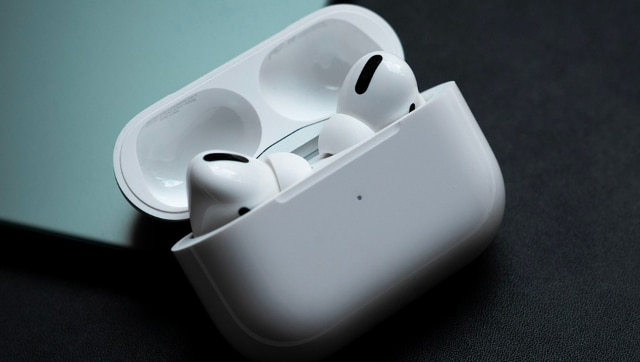
Apple is planning to launch ‘AirPods Lite’ to apparently take on cheaper wireless earbuds

Apple presently offers four different models of AirPods, ranging from the upgraded AirPods Max to the second-generation AirPods. Additionally, even though AirPods have gained a lot of popularity, they are not exactly inexpensive. However, the Cupertino-based tech giant is now reportedly developing a set of new earbuds called “AirPods Lite” to compete with less expensive wireless earbuds that eat away at Apple’s market.

Apple is planning to launch ‘AirPods Lite’ to apparently take on cheaper wireless earbuds

Despite being highly popular accessories, demand for AirPods is predicted to decline by the end of 2023. Furthermore, it is anticipated that shipments of AirPods would fall from 73 million units in 2022 to 63 million in 2023. This would be partly because of the low demand for AirPods 3 and the possibility that Apple won’t introduce new AirPods this year.

The tech giant has been developing the “AirPods Lite.” Reports describe it as a lower cost device aimed to compete with non-Apple earphones, it is currently unknown what exactly this product is and what characteristics it will offer.

Apple maintained the previous version AirPods 2 in stock at a cheaper price of $129 after the debut of AirPods 3 in 2021, whereas AirPods 3 cost $169. These “AirPods Lite” are probably going to be cheaper than $129 in price. Another option for Apple would be to simply reduce the price of the second-generation AirPods even further, perhaps to $99.

In 2022, Apple introduced the second generation AirPods Pro with significant enhancements, including better noise cancellation and a new charging case with the U1 chip for Precision Finding. However, there are no rumours about when Apple plans to update the regular AirPods (currently in the third generation) or even the premium AirPods Max headphones.


from Firstpost Tech Latest News https://ift.tt/hOfvkUW

Oppo to start making their own chipsets? Company may ditch Snapdragon and MediaTek in a few years

Several smartphone manufacturers have had to come up with new and innovative solutions to deal with the heat and sometimes battery drain that accompany some of the most popular chipsets. In other instances, they had to develop special hardware to allow their designers to add features that they would like their smartphones to have.

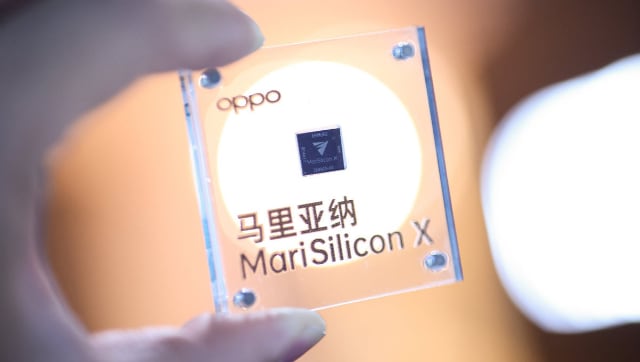
Oppo to start making their own chipsets_ Company may ditch Snapdragon and MediaTek in a few years

Oppo, for example, developed the MariSilicon X ISP and the new MariSilicon Y Bluetooth chip for various unique features that they wanted their smartphones to have. This, apparently has given the people at Oppo’s headquarters the idea to develop their own chips and SoCs. The tech giant is planning to introduce its own smartphone chipset in 2024.

Oppo has allegedly hired thousands of people to work on the project, but unfortunately, further details are scarce for now. It will almost certainly be an ARM-based chip meaning it will use Cortex CPUs and Mali GPUs with MariSilicon designs slotting in for things like the ISP and parts of the wireless connectivity.

It will be interesting to see who Oppo picks as their manufacturing partner in this endeavour. Google, when they decided that they want to use their own SoCs, decided to go with Samsung as designing a whole chipset from the ground up is a complicated process even when using ready-made pieces. But if Oppo’s team is really that big a ground-up design isn’t out of the question.

Last year MediaTek announced the Dimensity 5G Open Resource Architecture and opened its chipsets to customizations by smartphone makers, although we haven’t seen anything as extensive as the Tensor chip.

Just over a year ago, we saw a rumour that Oppo is interested in building a custom chipset based on TSMC’s 3nm node. Back then the report claimed that the first phones with the new silicon will arrive in 2023, but TSMC’s 3nm foundries experienced some delays, which may have thrown a wrench in those plans. For what it’s worth, the MariSilicon X chip is fabbed at TSMC’s 6nm foundries, so the two companies already have a working relationship.

Even Samsung Electronics reportedly wants to build a custom chip, separate from the Exynos chips supplied by its sister company Samsung System LSI. It doesn’t always work out, though, Xiaomi gave it a shot in 2017 with the Surge S1, but that fizzled out quickly.


from Firstpost Tech Latest News https://ift.tt/WZ7SOtM

The Indian smartphone industry holds a positive future despite recent global headwinds

Across all demographics, a whole new generation of Indians has embraced mobile technologies, particularly smartphones, to reap the benefits of the digital economy. The smartphone has rightfully replaced the functions of many other devices, whether it be a music player, a camera, or even a device facilitating financial transactions. India currently has more than 600 million smartphone users, a number that is anticipated to rise as more feature phone users switch to smartphones.

The Indian smartphone industry holds a positive future despite recent global headwinds (1)

While people across the world continue to benefit from the smartphone-powered Digital economy, there is an anticipation of a decline in the segment owing to the current and some arising challenges. If we look at the numbers, the third quarter of 2022 saw a decline in total smartphone demand despite an increase in high-end smartphone sales volume. This raises the crucial question: Is India also facing the effects of the global slowdown?

According to Counterpoint, the Indian smartphone market did eventually take a hit in the year 2022. Component shortages that hit the market at the start of the year were a significant contributing element, among others. Some of the players in the segment did manage to navigate these challenges owing to their agile supply chain operation and strong strategies. As we enter the year 2023, we do see a bright picture for the smartphone segment owing to India’s strong youth-oriented economy and their interest to be a part of a truly digitised India. Therefore, while the economic imbalances across the world continue to pose business challenges, here’s why the Indian smartphone market may have a better time in the coming year:

Transitioning from feature phones to smartphones
Mobile phones have provided Indians with numerous new opportunities to carry out essential tasks, including communications, education, transportation, handling emergency situations, e-commerce, and interacting with the government. In fact, as per a study, a large portion of those surveyed do not own a desktop computer, laptop, or tablet. Their smartphone served as both the main and only platform for accessing the digital world for them.

Except for the Covid hit in 2020, the Indian market has grown steadily over the past five years. In 2023, the market is expected to increase by 10 per cent to 175 million units. The rural sector is anticipated to develop at a CAGR of 6 per cent from 2021 to 2026, while the urban sector is anticipated to grow at a CAGR of 2.5 per cent. The need to implement fintech, e-health, and e-learning will drive this rising demand for smartphones, which is anticipated to stimulate higher Internet adoption rates.

Diving in with full speed, thanks to 5G
A lot more users are excitedly anticipating to experience the benefits of 5G. In fact, according to a Counterpoint analysis, the market penetration of 5G equipped smartphones reached 51 per cent at the beginning of 2022, exceeding that of 4G handsets. Although 5G smartphones have attracted a lot of attention in the industry and are currently accessible in many Indian cities, barely one-third of the market is anticipated to be made up of them in 2022. Due to its many applications, including remote healthcare and high-speed gaming, it is anticipated to become the fastest-adopted mobile technology. By 2026, an additional 135 million smartphones are anticipated to be shipped globally following the rollout of 5G.

Government initiatives will revolutionize smartphone manufacturing and usage in India
There is a legislative push to increase mobile phone penetration in India today. Recently, a tender for the purchase and distribution of smartphones to women in 2023 has been announced by the state of Rajasthan. Also, the government’s strong backing for the BharatNet effort to fiberize rural and isolated areas by 2025 and the proposed USD 10 billion (approximately Rs. 77,600 crores) incentive package to expand semiconductor production in India are sure to increase smartphone sales in India.

New smartphones will make up 95 per cent of all smartphone replacements soon
The smartphone market has shown a relatively quick replacement rate as customer needs in India keep rising. The typical lifespan of a mobile device in metropolitan areas is three years. Deloitte predicts that in the urban market, replacements will be split between 95 per cent of new smartphones and 5 per cent of used smartphones in 2026. The rural population is anticipated to follow a similar pattern, with a four-year average phone lifespan. In 2026, new gadgets are anticipated to account for about 80 per cent of replacements, while used devices will account for 20 per cent. It is anticipated that feature phones will eventually be replaced by smartphones as the number of smartphone users increases.

The long-term picture looks favourable
The Indian mobile phone market is expanding despite the global decline (by 12 per cent year on year to 301 million units in Q3 2022) in smartphone demand. For every stakeholder of the mobile value chain, this offers significant opportunity. The demand for cell phones will only increase as more and more Indians go online. Long-term market growth will be driven by a sizable installed base, feature phone-to-smartphone migration, local smartphone manufacturers, supply chain development, and the creation of fresh use cases. By FY26, it is anticipated that the global mobile phone market would earn INR 2.4 trillion in revenue, growing at a 14.5 per cent compound annual growth rate (CAGR), while the Indian mobile phone market is anticipated to increase in size by 9.7 per cent CAGR to reach 370 million units by FY26.

With the anticipated recovery in the economy, these customers will probably be more inclined to buy a new smartphone in 2023. In turn, this might result in a rise in smartphone demand in the upcoming year.

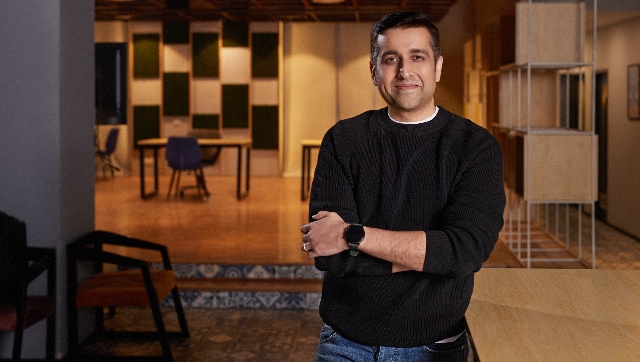
The author, Madhav Sheth, is the CEO of realme India, Vice President, realme and President, realme International Business Group.


from Firstpost Tech Latest News https://ift.tt/3l9GSpq

How China is developing its own parallel generative AI universe by copying Stable Diffusion and DALL-E2

Given how massive text-to-image tools from Stability AI like DALL-E2 and OpenAI’s ChatGPT have become in just months after their launch, there is no doubt that 2023 will be a massive year for AI bots. China, which has been conspicuously missing from AI-related innovations for some time now, will also be stepping up their efforts in the generative AI space. However, the way they will be going about it, seems a little dubious.

How China is developing its own parallel generative AI universe by copying Stable Diffusion and DALL-E2

Entrepreneurs, researchers, investors and the tech community, in general, are looking for ways to carve out a niche for themselves in China’s isolation. As a result, Tech firms are devising tools built on open-source models to attract consumer and enterprise customers. Individuals are cashing in on AI-generated content. Regulators have responded quickly to define how text, image, and video synthesis should be used. However, all this is coming amid US tech sanctions on China which is hampering their ability to keep up with AI advancement.

Creating for China, with a local twist.
Chinese tech giants have also showcased a few AI bots to the public which work with a twist that suits the country’s tastes and political climate. Apparently, most Chinese AI startups have based their generative models, especially text-to-image generative AI models, on the same principles and training mechanisms as DALL-E2. 

Beyond that though, Baidu, one of the biggest tech giants in China, has in recent years been stepping up its game in autonomous driving. Another Chinese tool that has made noise is Tencent’s Different Dimension Me, which can turn photos of people into anime characters. The AI generator exhibits its own bias. Intended for Chinese users, it took off unexpectedly in other anime-loving regions like South America. But users soon realized the platform failed to identify black and plus-size individuals, groups that are noticeably missing in Japanese anime

But unlike in the west, China’s effort to develop its own AI universe has government backing. Local Chinese governments are also investing in several projects on their own through IDEA, a research lab owned and backed by the Chinese Communist Party. 

Censoring AI
While no AI generative model is without its own inherent bias that crops up because of model training, in China, AI generative bots have their own filters. For example, Baidu’s text-to-image model filters out politically sensitive keywords.

While applying filters on generative AI is actually useful, any sort of a censorship is a double-edged sword. AI generative models have often been accused of churning out sexually explicit and sexist content. Furthermore,  users are asked to verify their names before using generative AI apps, just like all other aspects of the internet. 

The Chinese regulation, also explicitly bans people from generating and spreading AI-created fake news. How that will be implemented, though, remains to be seen.

Challenges ahead
The biggest challenge for China’s AI startups and tech firms has to be training their bots in neural networks since they don’t have the tools to do so, thanks to the US government imposing sanctions on China that prevent them from importing high-end AI chips.

As a result, many Chinese AI startups are focused on the application front that doesn’t need high-performance semiconductors that handle seas of data. As for those doing more advanced research using less powerful chips means computing will take longer and cost more. Such sanctions are pushing China to invest in advanced technologies over the long run.


from Firstpost Tech Latest News https://ift.tt/bQCYsTr

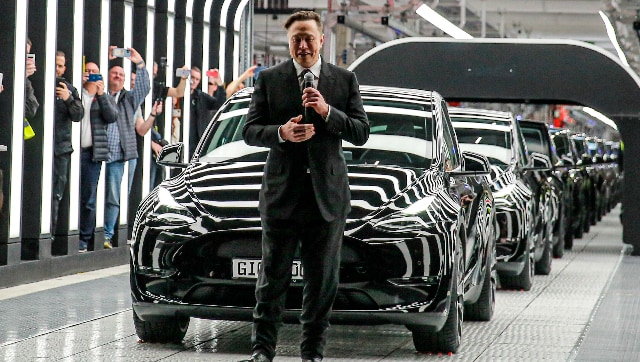
Elon Musk appoints Tesla's China chief, Tom Zhu to lead the EV maker’s global teams

A couple of weeks ago, we reported that Elon Musk had decided to relocate Tesla China’s chief, Tom Zhu to lead the carmaker’s new plant in Austin, Texas. Now, reports have surfaced online that Zhu will be looking after the operations of all of Tesla’s global teams, effectively making him the CEO of the EV manufacturing brand.

Elon Musk appoints Tesla's China chief, Tom Zhu to lead the EV maker’s global teams

To be clear, although Zhu has been promoted and his job title has been updated, he hasn’t been given the title, or the position of CEO, just the responsibilities.

Tom Zhu has been promoted to take charge of the electric carmaker’s U.S. assembly plants as well as sales operations in North America and Europe. Furthermore, Zhu’s title of vice president for Greater China has not changed and he also retained his responsibilities as Tesla’s most senior executive for sales in the rest of Asia as of Tuesday, which means he is likely to continue to manage and head Tesla’s Asia Pacific operations.

The move makes Zhu the highest-profile executive at Tesla after Elon Musk, with oversight for deliveries in all of its major markets and all of its production outside the still-ramping Tesla plant in Germany.

Zhu and a team of his reports were brought in by Tesla late last year to troubleshoot production issues in the United States, specifically at the Austin plant, driving an expectation among his colleagues then that he was being groomed for a bigger role.

Zhu’s appointment to a global role comes at a time when Musk has been distracted by his acquisition of Twitter and Tesla analysts and investors have urged action that would deepen the senior executive bench and allow him to focus on Tesla.

Under Zhu, Tesla’s Shanghai plant rebounded strongly from COVID lockdowns in China.

Tesla said on Monday that it had delivered 405,278 vehicles in the fourth quarter, short of Wall Street estimates, according to data compiled by Refinitiv. The company had delivered 308,600 vehicles in the same period a year earlier.

The Tesla managers reporting to Zhu include: Jason Shawhan, director of manufacturing at the Gigafactory in Texas; Hrushikesh Sagar, senior director of manufacturing at Tesla’s Fremont factory; Joe Ward, vice president in charge of Europe, the Middle East and Africa; and Troy Jones, vice president of North America sales and service.

Zhu, who was born in China but now holds a New Zealand passport, joined Tesla in 2014. Before that he was a project manager at a company established by his MBA classmates at Duke University, advising Chinese contractors working on infrastructure projects in Africa.

During Shanghai’s two-month COVID lockdown, Zhu was among the first batch of employees sleeping in the factory as they sought to keep it running, people who work with him have said.

Zhu takes charge of Tesla’s main production hubs at a time when the company is readying the launch of Cybertruck and a revamped version of its Model 3 sedan, and is dealing with a supply chain nightmare thanks to the resurgence COVID in China.


from Firstpost Tech Latest News https://ift.tt/AQ5GD4E

Monday, 2 January 2023

China continues to expand space programme, unveils plan to launch the largest optical telescope in Asia

The Peking University in China has unveiled its plan to build the largest optical telescope in Asia and close the gap in astronomy capabilities with the rest of the world. This move comes amidst China’s expanding space programme after being shut out of global space collaborations at the behest of NASA and being left in isolation for years.

China continues to expand space programme, unveils plan to launch the largest optical telescope in Asia

The project aims to create the first stage of the telescope, which will have an aperture of 6 metres wide, by 2024. Later on, in another 6 years, a different module will be attached to it, which will have an aperture of 8 metres. The project is called the Expanding Aperture Segmented Telescope or EAST in English.

According to a statement released by Peking University, the telescope “will greatly improve China’s observation capabilities in optical astronomy.”

The EAST abbreviation is fitting since the facility would become the first world-class optical telescope in the eastern hemisphere. The world’s largest facilities as of today are in the Western Hemisphere at sites around Mauna Kea in Hawaii, Atacama in Chile, and the Canary Islands off the coast of northwest Africa, and is controlled by a coalition of nations led by the US.

The EAST telescope’s first phase envisions building a mirror made up of 18 hexagonal mirror segments, resembling the mirror for NASA’s James Webb Space Telescope. The mirror would have a diameter of around 6 metres feet, again similar to that of JWST.

China continues to expand space programme, unveils plan to launch the largest optical telescope in Asia

However, unlike the JWST which orbits about 1.5 million kilometres away from the Earth, the  EAST telescope would be built on Saishiteng Mountain near Lenghu Town in Qinghai Province on the Tibetan plateau at an altitude of around 4200-4500 metres. The second phase would add a ring of 18 more hexagonal segments around the mirror, expanding it to a diameter greater than 8 metres.

Peking University estimates the project will cost between 500-600 million yuan or $69-84 million. The university also notes that astronomy plays an important part in technology and social development, and that the 2020 Nobel Prize in Physics was awarded to scientists who discovered the black hole at the centre of the Milky Way using powerful optical telescopes including the twin Keck telescopes atop Mauna Kea and the Very Large Telescope (VLT) in Chile’s Atacama Desert.

EAST would also be a rather important addition to China’s broader growing astronomy capabilities. The country has built the world’s largest single-aperture radio telescope called FAST, and plans to launch a large space observatory known as Xuntian as soon as late 2023. China also launched its own space station called the Tiangong space station last month, after completing the building and docking of its final module in late 2022.


from Firstpost Tech Latest News https://ift.tt/5VBmeh2

US’ FCC lauds India for banning TikTok, other Chinese Apps and setting up an important precedent

The commission of the FCC or the Federal Communications Commission of the United States, Brendan Carr said that India India set an “incredibly important precedent” by banning TikTok two and a half years ago and that the US should follow a similar strategy, when dealing with the Chinese tech giant, Bytedance.

US’ FCC lauds India for banning TikTok, other Chinese Apps and setting up an important precedent

Carr warned that TikTok is a very “sophisticated surveillance tool,” and told the Economic Times that banning the social app is a “natural next step” in the US’ efforts to secure their own communication networks. 

The senior Republican on the Federal Communications Commission expressed concern that China may use private and sensitive information obtained from TikTok for “surveillance, blackmail, espionage, and foreign influence campaigns.” Evidence has already suggested that the Chinese have tried to influence elections in the US in the past.

Carr’s remarks further indicate a growing push among UD states and lawmakers that are increasingly growing cautious of TikTok, which has amassed over 100 million users in the nation.

“India’s strong leadership has been informative and helpful as we have debated banning TikTok in the US.”. “For those who argue that there is no way to ban an app, India is an example of a country that has done it and done it successfully,” said Carr.

India has banned hundreds of apps, including TikTok, PUBG Mobile, Battlegrounds Mobile India and UC Browser, with affiliation to China in the past two years after skirmishes intensified and grew on the border, after China forced their way into Indian territory, and tried to establish their bases on Indian land.

The Indian government had said it had banned the apps because they posed threats to the “national security and defence of India, which ultimately impinges upon the sovereignty and integrity of India.”

The US House of Representatives banned TikTok on all House-managed devices last week, citing a “high risk due to a number of security issues.” The move follows a bunch of state governments blocking the app from state-managed devices over concern that China could use it to track Americans and censor content.

Just a few weeks ago Bytedance was forced to terminate a total of four emplyees after news broke out that a few employees had been stalking US journalists on TikTok and were accessing their private information, illegally. 


from Firstpost Tech Latest News https://ift.tt/kKQCtOS

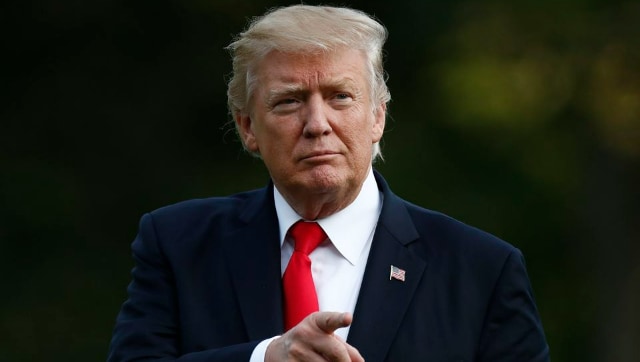
Meta is contemplating whether to let former President Donald Trump back on Insta and Facebook

After his Twitter account was reinstated, former US President Donald Trump and his team wondered if he would be allowed back on Meta’s platforms, Instagram and Facebook, as per a report by the Financial Times.

Meta is contemplating whether to let former President Donald Trump back on Insta and Facebook

The social media giant had previously said it will decide by Jan 7 whether to allow the former president to return. However, that announcement of the decision has now been postponed and is expected to be made later this month, the Financial Times said, citing a person familiar with the matter.

Meta has set up a working group to focus on the matter, according to people with knowledge of its operations, the report said, adding that the group includes staffers from the public policy and communications teams, as well as from the content policy team. The main task of the group is to decide whether Trump’s social media accounts with Meta’s properties would be safe. 

The development comes after Elon Musk, Twitter’s new owner, revoked a permanent ban on Trump in November last year on the social media platform after polling users.

Trump maintained that he had no interest in returning to Twitter, and would rather stay on his own social media platform, Truth Social.

“I don’t see any reason for it,” the former president had said via video when asked whether he planned to return to Twitter by a panel at the Republican Jewish Coalition’s annual leadership meeting last year. 

Trump has mounted relentless attacks on the integrity of US voting since his 2020 election defeat and launched a bid in November to regain the presidency in 2024, aiming to pre-empt potential Republican rivals.

Elon Musk’s unveiling of internal Twitter documents, through Twitter Files, is only bolstering Trump’s statements and position among his followers.


from Firstpost Tech Latest News https://ift.tt/8GI0HtW

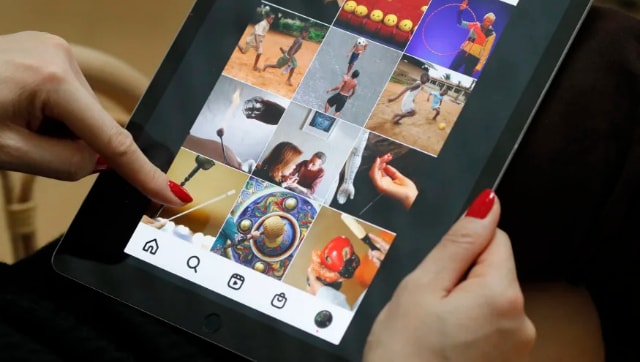
Dear Instagram, it's 2023. Can we please have an app optimised properly for tablets and iPads?

It wouldn’t be farfetched to say that Meta has a strange relationship with one of its most successful properties, Instagram. For all intents and purposes, Meta seems to be hell-bent to milk everything Instagram as much as it can – that is the reason, why Meta wants the image and video sharing platform to become more like TikTok and revolutionise what people think of short from videos and how people consume it. And yet, Meta simply refuses to do that one thing that Instagram users, mainly social media managers, want desperately – make an Instagram app for tablets and the iPad.

Instagram need-s to make a dedicated and properly optimised app for tablets and iPads users

Instagram initially started out as an iPhone-only app for sharing photos, almost 12 years, ago, around the same time that the iPad was launched. And apart from making an app that basically lets users browse Instagram in its web version, neither Meta nor Instagram have done much in terms of a dedicated tablet version of the App.

The need for a tablet or iPad version of the App
Instagram, and in fact all social media platforms have become massive arenas for advertisements. Some of the most prominent users on the platform, starting from micro-influencers to proper, mega stars have dedicated teams that manage the social media presence of these stars. Unlike most other social media platforms, Instagram doesn’t work that well on desktops or Macs, and of course, it doesn’t work well on an iPad. This alone should be a big enough reason for Instagram to make a dedicated app for tablets and iPads. 

Secondly, some of the tablets, especially some of the latest iPads from Apple are powerful enough to substitute laptops and Macbooks. Not only are people using this to surf the web and do basic productivity tasks, but several social media managers and artists are also actually using their iPads to edit videos, music, and photos. 

Instagram actually made apps for the iPad 
It may come as a surprise but Instagram actually made a bunch of apps for iPads in particular. Instagram themselves have made two iPad camera apps, Hyperlapse and Boomerang, but not the main app.

This decision to make camera apps for the iPad actually makes no sense when you consider that cameras on the iPad have never been even remotely comparable to those on the iPhone. So Instagram, making two dedicated camera apps for the iPad, but not the basic Instagram app itself, doesn’t make much sense.

Meta killed Instagram alternatives for iPads
Several developers actually made apps that let users browse Instagram in a better manner than the actual app. However, Instagram changed its API that gave developers access to the service in their apps. Instagram killed the market for iPad app alternatives without making its own.

Web applications can’t compete with properly coded apps
Meta and Instagram insist that the “web-version app” of Instagram’s website is more than good enough. However, it is nowhere close to the native app. Try comparing using a dedicated app, with using the website version of the app, and you’ll see what we’re on about.


from Firstpost Tech Latest News https://ift.tt/A451x2t

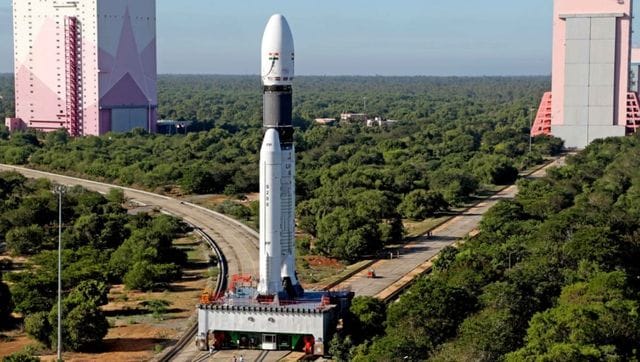
Mexico seeks support from ISRO to design, build and launch satellites for Mexican Space Agency

As per a recent announcement by the Indian Space Research Organisation or ISRO, the Mexican Space Agency or AEM has sought help to design, build and launch a remote sensing satellite for Mexico.

The request seeking ISRO’s support was made at a recent meeting between ISRO Chairman S. Somanath and Dr. Salvador Landeros Ayala, Director General of AEM. ISRO has revealed that it will work on the proposal with support from the Ministry of External Affairs, and see what can be done.

“Both heads of the agencies discussed the ongoing cooperation activities mainly in earth observation. While thanking ISRO for developing a mobile application for forest fire monitoring and sharing it with the Mexican Forest Department, the AEM chief sought India’s support in building and launching a remote sensing satellite for Mexico,” said ISRO, in a statement released to the press.

Pankaj Sharma, Ambassador of India to Mexico and Gustavo A. Cabrera Rodriguez, Ambassador of Mexico for the Latin American and Caribbean Space Agency (ALCE) also participated in the meeting.

In June last year, ISRO and AEM signed a Scientific Cooperation Agreement on Crop Monitoring and Capacity Building. In 2014 the two space agencies signed a Memorandum of Understanding for peaceful purposes.

As per the agreement, the two space agencies would explore the development of remote sensing techniques for crop monitoring using Earth Observation data for the United Mexican States and generate user-friendly operational tools, techniques, and procedures for agricultural drought monitoring. 


from Firstpost Tech Latest News https://ift.tt/RBir0eO

New Horizon: 2023 looks promising for tech as Generative AI and foldable devices become mainstream

2022 was an awesome year for tech. However, 2023 promises to be even better, for the most part. The smartphone industry for example, will see more manufacturers go for 200MP camera sensors, even in the non-flagship, premium category. And let’s not even get started with foldable and how many other manufacturers plan to enter the foldables market.

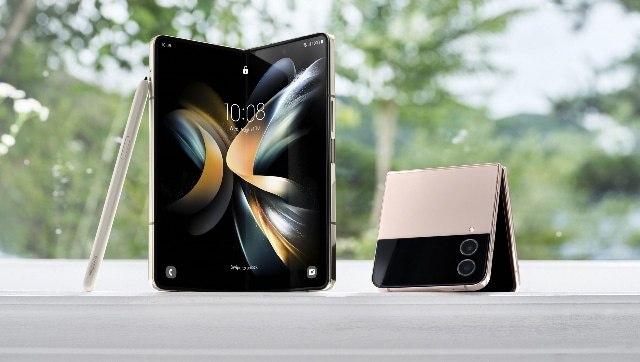
Samsung plans to sell over 270 million devices in 2023, push foldable devices like the Z Fold and Z Flip hard

And let’s not even get started with what engineers and scientists have been able to achieve in the field of AI and machine learning. If ChatGPT and image generators like DALL-E were any indication, 2023 will see many more of these generative AI models being released.

Wondering what 2023 looks like for tech in general? Well, here’s what we think will happen this year:

The megapixel wars explodes
We already had a few smartphones with 200MP sensors. Although these smartphones have usually been flagship devices from select manufacturers this year, expect more and more smartphone manufacturers to jump onto this bandwagon.

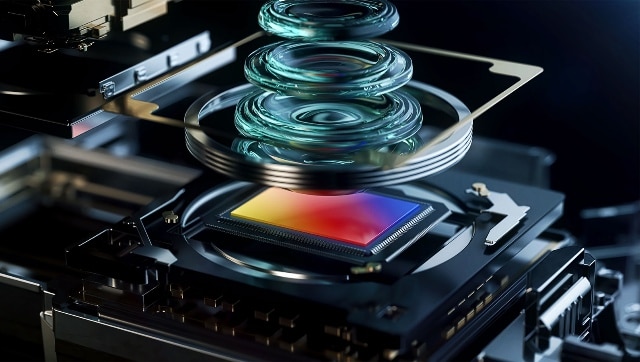
After a 200MP sensor, Samsung is already developing a 400-450MP smartphone camera

We think that even premium smartphones that aren’t exactly flagships will start featuring 200MP cameras this year,

Generative AI explodes
Generative AI refers to a category of artificial intelligence techniques that are used to generate new, original content like text or literature, images, audio, or video. Think ChatGPT or the Dall-e image generator. ChatGPT in particular represents a massive leap in real-time language processing and language models in general.

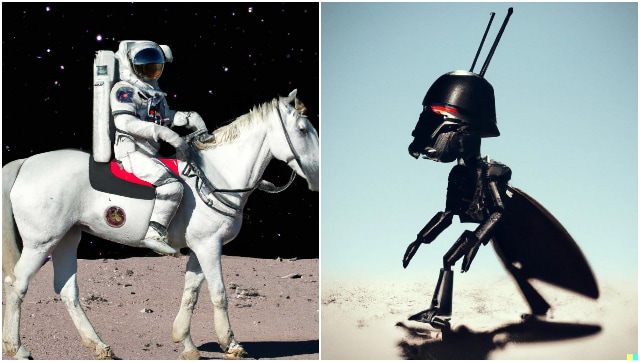
OpenAI's image generator Dall-E is now open to the public, users can generate ‘quality art’ using keywords

The general population on the internet, the most basic of users have just started to learn about what exactly AI can do – never before has the mass public been so exposed to the power of AI. In 2023, the use of AI bots like ChatGPT will only explode. Moreover, we will see several other chatbots and generative AI models crop up.

Premium smartphones with not so Premium SoCs
Smartphone manufacturers have realised that most users upgrade their devices every two to three years. Moreover, processors have become very efficient and powerful, Barring the most demanding games and some other crazy stuff like 8K recording and processing, mid-tier SoCs can handle pretty much anything.

Manufacturers now have a perfectly valid reason to pair sub-par or rather mediocre SoCs with devices that fall in the premium price range. And by the time the SoC really starts showing their age, the user would have anyway thought of upgrading their devices. 

The rise of foldables
In 2022, we saw a bunch of smartphone manufacturers get into foldables in a much serious manner. In 2023, foldables will explode to a whole new level. This year, we may finally get to see Google and Apple enter into the foldable market in some way or the other.

Asus launches Zenbook 17 OLED, an all-screen foldable tablet PC that turns into a laptop

Furthermore, we will also see a number of all-screen foldable laptops. Assuming there are no issues with the tech supply chain sector, we should see some pretty impressive foldable devices like smartphones, laptops and tablets making their way into the market this year.

Metaverse startups
Forget what Facebook did with their idea of the Metaverse. The reality is that there are several startups who are doing some seriously cool things in the digital realm. The metaverse as an idea will continue to grow and evolve in the coming year.

There are several factors that could contribute to the growth of the metaverse. One is the increasing availability and accessibility of virtual reality technology, which makes it easier for people to experience and interact with the metaverse.  The growth of the metaverse may also be driven by advances in artificial intelligence, which could enable more realistic and immersive experiences within the metaverse. Overall, the future growth of the metaverse is likely to be influenced by a combination of technological advancements, social trends, and economic factors, so expect more and more startups who start working in this area.

MedTech and BioTech to grow
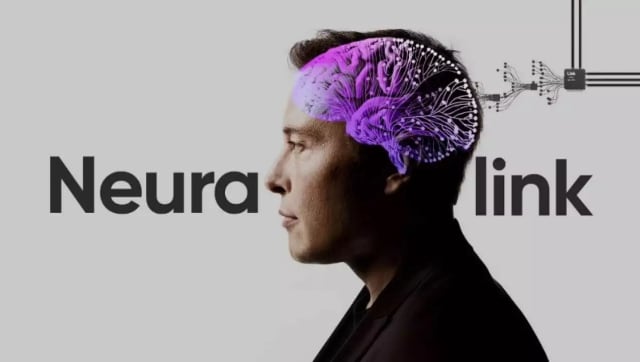
Thanks to Elon Musk’s announcement around Neuralink, BCIs and other BioTech and MedTech initiatives will grow exponentially. We will see more and more established players sharing their findings and showcasing the tech they develop.

What is neurotechnology and Brain-computer interface, the tech that Elon Musk’s Neuralink uses

Furthermore, we may also see the US’ FDA and other medical associations all over the world come up with a set of rules and guidelines for BioTech companies. But best of all, we might get to see startups doing all sorts of things that just a few years ago, would seem to be straight out of a science fiction movie.


from Firstpost Tech Latest News https://ift.tt/oxCrRFS

Navigating the World of Crypto: Exploring the Potential of Crypto4u

 In recent years, the world of cryptocurrency has undergone a seismic shift, evolving from a niche interest among tech enthusiasts to a glob...