Contact Form

Name

Email *

Message *

Wednesday, 1 September 2021

New Royal Enfield Classic 350 review: Modernised icon is a distinguished gentleman’s ride

The pandemic has been one blur of days. Back in November 2019, the Royal Enfield Meteor 350 was one of the first vehicles I reviewed, just a couple of weeks after I joined Tech2. Twenty-one months since, we have the refreshed Classic 350, which was the bike I wanted all along. It took a while, but it was worth the wait. I’m hoping that RE picks up that 21-month-old Meteor from me as quickly as possible and replaces it with a shiny Halcyon Green C350. You might imagine from the tone so far that this is going to be a generally positive review. The TL;DR is this: if you’ve always wanted a Royal Enfield, or owned one in the past and are still faithful, the new Classic 350 is a great choice. Here’s why.

The Classic 350 is still classic

There will be those that lament a certain lack of ‘character’. If that’s you and you like to regularly scrub your hands with kerosene, stop right here and go buy your mechanic another pack of smokes. After twenty years of dismantling carbs on the roadside with my RD350, I’m quite ready to never do that again. And with the new Classic 350, you’ll probably never have to. It may have something to do with the fact that it’s fuel-injected, but the point is that this is an all-new engine, just like the one in the Meteor 350. It’s solid, smooth, happy to rev, makes decent power and torque (20.2 hp and 27Nm). All the things that the older Classic is, well, not.

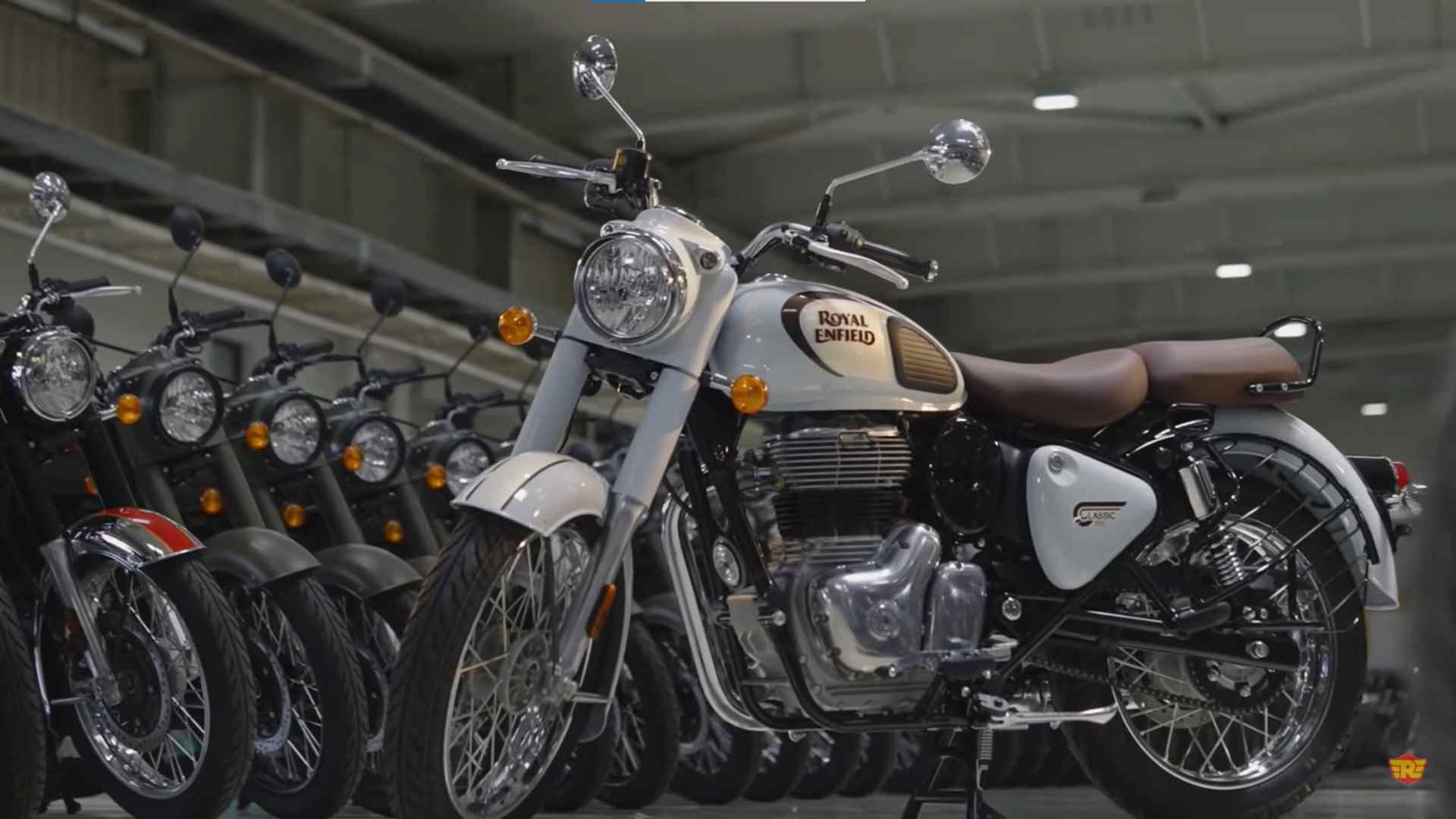
The design and styling elements that have endeared the Classic 350 to many are still in place with the 2022 iteration. Image: Royal Enfield

So why is it still authentic? Royal Enfield has gone to great lengths to not change the things that people like, and design is clearly front-and-centre on the priority list here. At first and even second glance, the 2021 Classic 350 looks every bit like the old one. There are changes, of course. To the wheels, to the frame, the motor looks a bit different, as does the swingarm, there are disc brakes front and rear, and a myriad other changes. But everything comes together to recreate a very beautiful motorcycle. You have the classic tank, shrouded telescopic forks, the nacelle that houses the instruments (Royal Enfield has always called it something I quickly forgot), the little metal peak over the headlamp – all hark back to Royal Enfields of old, all totems of their legacy in motorcycling, and all perfect nods to what came before. Even the large chrome exhaust looks about as clean as it can in a BS6 world, and even sounds okay. This is a Royal Enfield you’ll be happy to swing a leg over.

The Classic 350 is new in all the right places

Just like the Meteor 350, from which it borrows heavily, much of the Classic 350 is all-new. The motor and frame are mostly borrowed from that motorcycle, with a slightly shorter wheelbase and taller seating position. It’s the same basic motorcycle with slightly different geometry and the format is different. You sit on instead of in the motorcycle. Other borrowed bits include the switchgear, handlebar grips and on the top model, the Tripper navigation screen; only this time, it is nicely integrated into the instrument cluster. We’ll skip the tech discussion for this review, because the Tripper navigation system and app integration are identical to what we saw on the Meteor 350.

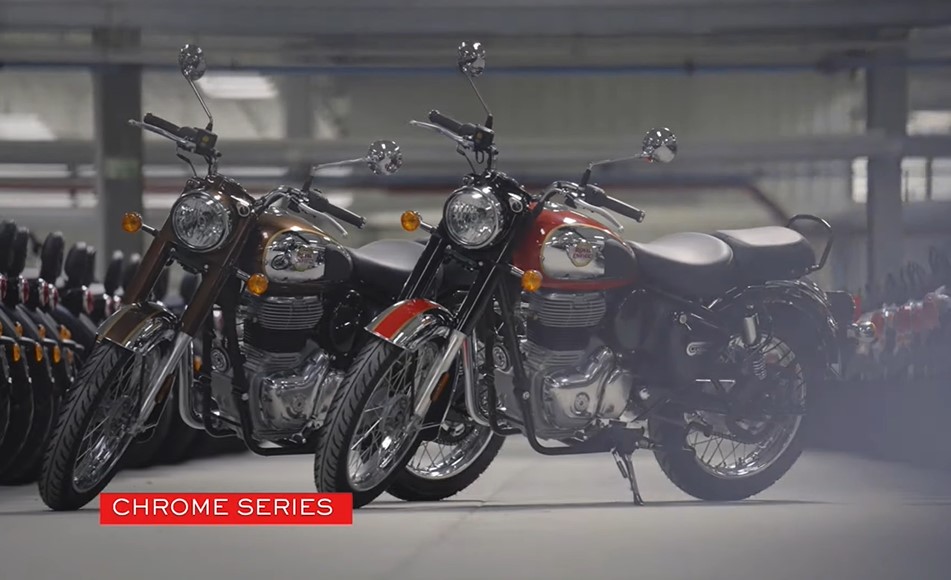
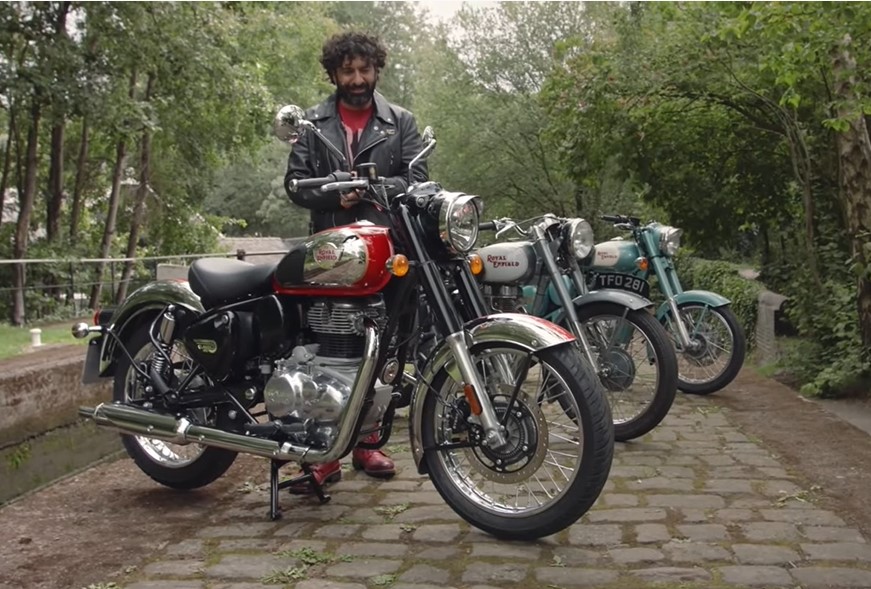
The new Classic 350 is available in eleven colourways, including the (L-R) Signals, Chrome and Halcyon versions. Image: Royal Enfield

Also new are the wheels, which can be cast or wired, depending on the model you choose. Personally, I like the 19-inch front/18-inch rear wire-spoke wheel combo. The two cast alloy options just don’t seem congruent with the image of the Classic, but there are many, many options and 11 colourways to choose from. The suspension is also revised from the Meteor 350 to suit the new format, but visually looks the same as any Classic. So really, the motorcycle isn’t all that different from the well-loved (and sometimes troubled) model that it replaces. It just has the troublesome bits modernised, and the love is kept alive.

On the go: all is forgiven

For 67 years, Royal Enfield has made the same basic motorcycle, with a revolving door of idiosyncrasies to keep the faithful entertained and, well, faithful. I learned how to ride a motorcycle on a 1984 Bullet 350 modified to look much like a modern Meteor (and quite a bit better, in my memory). I managed to kick-start it without breaking a femur, and only left a small amount of oil wherever I parked. I also learned about the families and struggles of the mechanics we routinely broke bread with and generally had a good time riding pillion as the owner – a former RD350 rider – wrung its neck around the streets of Mumbai. But when it came time to buy a motorcycle, I bought a used RD350. The Bullet was just too slow, too common, too idiosyncratic and unreliable for my taste. So, I bought a bike that was all those things, but was rare and really quick. Problem solved.

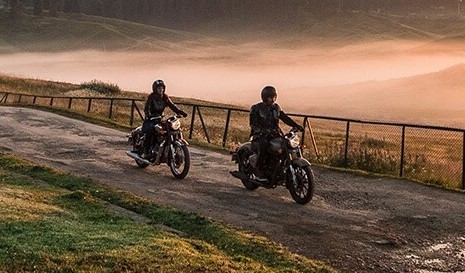
The new Classic 350 is happy to chug along at highway speeds all day long. Image: Royal Enfield

Were today’s Classic 350 available back in 2001, I might have made a different choice. Today’s Classic 350 is likely to be reliable, not too slow, clean-running, efficient and most importantly, it’s likely to work when you really need it to. In 21 months of (mostly) lockdown, the Meteor 350 in my shed has never failed to start at the first thumb. I just don’t ride it that much because the foot-forward riding position just doesn’t work for me. The Classic 350 fixes this for me, while looking way, way better.

At speeds of up to 100kph, I had no complaints with the Meteor 350, and this continues to be the case with the Classic 350. It pulls away smartly thanks to its generous low-end torque, feels smoother than any Bullet you’ve ever ridden, and the gears never miss. I mean literally, never. Beyond 100 kph, the Classic is at a bit of a disadvantage thanks to the larger 18-inch wheel at the rear (the Meteor uses a 17-inch rear), which results in different gearing and more laboured progress at high speeds.

Nevertheless, I found that if you properly pulled the bike in fourth, you could reach high speeds in fifth with no problem. But this is a thing, and has been noticed by every journalist that rode the bike. It is not a deal-breaker, and could be considered harmonious with the character of the Classic.

This is still a highway-capable motorcycle that you can take touring. In fact, more so than the old Classics, since the new engine is an absolute gem. Torque is available down low, and you can rev it without feeling stressed. The faster you go, the smoother the bike seems to get, until close to the limit. This should make it much more comfortable over long distances. At a mostly-constant 90 kph, I found myself fresh at the end of our long riding day.

The new Classic 350 stays composed even when you're riding over giant potholes at speed. Image: Royal Enfield

Our press ride was along the NH4 to Jadhavgadh, turning off onto rural roads across lush meadows on the last stretch. The highway is damn good, until it isn’t, and by then, it’s too late to do anything about it. Eight-inch craters on otherwise perfect tarmac is enough to cause crashes, but the new Classic 350 dealt with them at speed with surprising composure; elegance, even, where the old Classic would have been a real handful… assuming you had managed to cling on. The suspension setup is exemplary for what it is – basic twin shocks at the back and a 41 mm telescopic fork up front. It works really, really well in combination with the new, stiffer chassis. The old Classic had a chassis that I can best describe as al dente.

Brakes on the new Classic 350 are good. The consensus is that they lack bite, but are adequate and did the job ably, ensuring there were no hairy moments. For some reason, my complaints about the meaty levers did not resurface, despite being about as fresh to me as they were in 2019.

Ergonomically, the new Classic 350 feels just right to me. The handlebar is within reach with a slightly canted-forward riding position. The rider’s legs are a little in front of the centre of gravity, and perfectly useful for standing up when you do manage to see an eight-inch crater in time. I did a little over 200 km over the course of the riding day in dry as well as wet weather, and came out unscathed, relaxed and impressed with the Classic 350.

Caveats: few and fixable

Thankfully, I have little to fill this section with, and all of these niggles have been universally recognised and will likely be fixed by the time production units reach owners. In brief, the mirrors come loose and don’t adjust much, the Tripper screen is angled poorly unless you’re super tall, and the rubber foot pegs tend to be slippery with riding boots on.

It may look familiar, but the new Classic 350 is a clear leap over its predecessor in terms of ability. Image: Royal Enfield

Verdict: there’s a Classic 350-shaped spot in my parking

As I touched upon in my Meteor review, Royal Enfield has successfully transformed itself into an aspirational lifestyle brand over the past few years. The gear they send us for review (including the amazing kit I rode with, that I can’t talk about yet) is top-notch, with good build and world-class armour. It’s the sort of stuff I’d be happy wearing (and often do) while riding other motorcycles because it’s good stuff. With the Classic 350 (launched at a starting price of Rs 1,84, 374), I feel like the bike has finally caught up with the gear. This is a proper, aspirational motorcycle that I would be happy to recommend to anyone inclined. Heck, I’d be happy to ride it every day when I don’t feel like looking like a poser on my adventure bike that lies mostly parked. The Meteor has its place, but not in my garage.

Royal Enfield, kindly do the needful.


from Firstpost Tech Latest News https://ift.tt/3mQwdvN

From meteor showers to Neptune at opposition: List of celestial events in September to watch out for

In the month of September, stargazers are in for a treat. Several celestial phenomena are expected to take place in the coming days. From meteor showers to Neptune at opposition, space enthusiasts will be observing several such sky events in September 2021.

Starry night

Below is the list of celestial phenomena that are to come in the following month:

1 September (Aurigid Meteor Shower)

It is a constellation, where big bright stars are easy to spot in the sky. This Aurigid meteor shower is a minor one with its maximum rate (ZHR) being only about six meteors per hour. As the moon will be 26 percent illuminated that should not pose any hindrance to shooting stars.

3 September (Mercury at its Peak)

On this day, Mercury will reach its highest point in the sky during the evenings. According to the Space Tourism Guide, Mercury will be just 11° above the horizon after sunset.

9 September (Perseid Meteor Shower)

Usually, September is not known for its meteor showers. However, on the 9th of this month, you can spot ε-Perseids meteors in the sky. They appear to radiate the night sky, which is how meteor showers get their names.

9 September (Close Approach of Moon and Venus)

Venus will appear bright within 4°04′ of the crescent Moon on this day. It will be the best time to head out for viewing a close approach between the Moon and Venus.

10 September (Comet 4P/Faye at Perihelion)

Comet 4P/Face will reach its closest point to the sun on this day. To view it, the comet will be just 1.62 AU from the sun at around 2:00 am and 5:00 am local time.

11 September (Asteroid 2 Pallas at Opposition)

This asteroid will be easily seen in the sky. Moreover, it will be placed close to Neptune; it will be the best time to spot these two objects.

14 September (Neptune at Opposition)

On this day, ice giant Neptune will be at opposition making it a great time to spot the distant planet. According to Timeanddate.com, Neptune will be high in the southern sky.

16 September (Close approach of Moon and Saturn)

The celestial bodies of Saturn and the Moon will be roughly 3°45′ apart. If you have a telescope, that will be enough to capture it.

17 September (Close approach of Moon and Jupiter)

On this day, Jupiter and the moon will appear at their closest, which is just 3°57′ apart. While Saturn will be in the same general area of the sky that day.

22 September (September Equinox)

On this day, the season's official change. Usually, the September Equinox which is called the “autumnal equinox” in the northern hemisphere and the “vernal equinox” in the southern hemisphere marks the point where earth experiences equal lengths of day and night.


from Firstpost Tech Latest News https://ift.tt/3gR6EXx

New Royal Enfield Classic 350 launched in India, prices start at Rs 1,84,374: Check variants, features

It’s time to welcome the latest avatar of one of India’s most-loved motoring icons – the new-generation 2022 Royal Enfield Classic 350, which has been launched today at a starting price of Rs 1,84,374. The new-gen Classic 350 will be available with single- and dual-channel ABS options, with a choice of Halcyon, Chrome, Dark, Signals and Redditch colour schemes. Prices for the single-tone Redditch range starts at Rs 1,84,374, with the Halcyon range priced from Rs 1,93,123, the armed forces-inspired Signals range priced from Rs 2,04,367, the Dark range priced from Rs 2,11,465 and the range-topping Chrome range priced from Rs 2,51,118 (all prices ex-showroom, Chennai).

Prices for the five main versions the new Royal Enfield Classic 350 will be available in. Image: Royal Enfield

Being the second model based on Royal Enfield’s J platform, the 2022 Classic 350 is all-new under the skin, even though in pure design and styling terms, it doesn’t stray too far from the outgoing bike. There’s a subtle visual update with fresh styling cues thrown in, and Royal Enfield has also revealed the motorcycle will be available with both wire-spoke wheels as well as alloy wheels, depending on the variant.

The 2022 Royal Enfield Classic 350 has the same 349 cc engine as the Meteor 350. Image: Royal Enfield

The Classic 350 uses an all-new chassis, and carries over the Meteor 350’s 349 cc, single-cylinder air-cooled engine that makes 20.2 hp and 27 Nm of torque. It gets 41 mm telescopic forks, adjustable rear shock absorbers, larger disc brakes (300 mm front, 270 mm rear), single- and dual-channel ABS (depending on the variant) and the company’s new Tripper Bluetooth-enabled navigation system with a full-colour display.

The new Royal Enfield Classic 350 will continue to rival the likes of the Honda H'ness CB 350 and the Jawa range of motorcycles.


from Firstpost Tech Latest News https://ift.tt/3mRKW9B

New Royal Enfield Classic 350 India launch highlights: Prices for new-gen Classic 350 start at Rs 1,84,374

11:58 (IST)

New Royal Enfield Classic 350 launched in India, prices start at Rs 1,84,374: Check variants, features- Technology News, Firstpost

www.firstpost.com

11:55 (IST)

New Royal Enfield Classic 350 review goes live at 1pm!

Our full review of the new Royal Enfield Classic 350 will be published today at 1 pm, so make sure you check back for our thoughts on the new-gen C350.

11:47 (IST)

New Royal Enfield Classic 350 prices

Here's a closer look at all the versions of the Classic 350, along with their prices, which start at Rs 1,84,374 (ex-showroom, Chennai). 

11:44 (IST)

New Royal Enfield Classic 350 colour options

The new Royal Enfield Classic 350 will be available in a total of five versions and 11 colourways. 

11:42 (IST)

Your first look at the new Royal Enfield Classic 350!

Here it is! This is the all-new Classic 350. More details to follow.

11:32 (IST)

2022 Royal Enfield Classic 350 launch begins!

Royal Enfield chief Siddhartha Lal kicks off the launch of the new-gen Classic 350 by mentioning this year marks 120 years of Royal Enfield.

11:16 (IST)

Watch the launch of the 2022 Royal Enfield Classic 350

You can follow the live stream of the launch of the new Royal Enfield Classic 350 right here.

11:00 (IST)

2022 Royal Enfield Classic 350: New under the skin

Being the second model to be based on Royal Enfield’s J platform, the 2022 Classic 350 is all-new under the skin, with a new chassis.

10:31 (IST)

Welcome to the launch of the 2022 Royal Enfield Classic 350!

Good morning, folks! Welcome to Tech2's live coverage of the arrival of the new-generation Royal Enfield Classic 350. The launch event begins in about an hour from now, so stay tuned as we bring you all the updates LIVE from the launch.

It’s almost time to welcome the latest avatar of one of India’s most-loved motoring icons – the new-generation 2022 Royal Enfield Classic 350 will be launched today. Over the years, the Classic 350 has established itself as a pillar of strength for Royal Enfield, consistently finding buyers and establishing itself as the default pick for anyone wanting a retro-style, mid-sized motorcycle. Royal Enfield has embarked on a journey to further enhance its offerings, with the Meteor 350 being the first of several new-generation products the company has lined up for India and overseas markets. The Classic 350 is set to follow in the same direction.

Being the second model to be based on Royal Enfield’s J platform, the 2022 Classic 350 is all-new under the skin, even though in pure design and styling terms, it’s unlikely to stray too far from the outgoing bike. Expect to see a subtle visual update with some fresh styling cues thrown in, and Royal Enfield has also revealed the motorcycle will be available with both wire-spoke wheels as well as alloy wheels, depending on the variant.

The Classic 350 uses an all-new chassis, and is expected to carry over the Meteor 350’s 349 cc, single-cylinder air-cooled engine that makes 20.2 hp and 27 Nm of torque. It’s also likely to have telescopic forks, adjustable rear shock absorbers, larger disc brakes, single- and dual-channel ABS (depending on the variant) and the company’s new Tripper Bluetooth-enabled navigation system.

Expect the 2022 Royal Enfield Classic 350’s prices to range from Rs 1.90 – 2.20 lakh (ex-showroom).


from Firstpost Tech Latest News https://ift.tt/3zyPgOB

ISRO successfully conducts hot test on Gaganyaan's service module propulsion system

The Indian Space Research Organisation recently conducted a hot test on its Gaganyaan Service Module (SM) Propulsion System on 28 August.

This was the first hot test of the System Demonstration Model (SDM) of the Gaganyaan SM Propulsion System which differs from the hot test the agency conducted on the Vikas engine.

The test was conducted in the ISRO Propulsion Complex (IPRC), Mahendragiri, Tamil Nadu for a duration of 450 seconds.

Representational Image. The GSLV-F10 will launch the EOS-03 satellite today, 12 August at 3.43 pm IST from Satish Dhawan Space Centre (SDSC) SHAR, Sriharikota. Image credit: ISRO

According to an ISRO statement, the system performance met the test objectives and was a close match with pre-test predictions.

A series of hot tests will be conducted to simulate various mission conditions as well as off-nominal conditions.

The Service Module is part of the Gaganyaan Orbital module and is located below the crew module and remains connected to it until re-entry.

The SM Propulsion System consists of a unified bipropellant system consisting of 5 nos. of 440 N thrust engines and 16 nos. of 100 N Reaction Control system (RCS) thrusters with MON-3 and MMH as Oxidizer and Fuel respectively. The System Demonstration Model (SDM), consisting of 5 nos. of 440 N engines and 8 nos. of 100 N thrusters.

Gaganyaan astronauts go back to Russia

The objective of the Gaganyaan programme is to demonstrate the capability to send humans to low earth orbit onboard an Indian launch vehicle and bring them back to earth.

Four Indian Air Force (IAF) pilots have been selected to take part in this human spaceflight. They recieved their training from the Russian space agency Roscosmos over a period of one year in Russia's Zvyozdny gorodok city near Moscow.

According to PTI, the contract for the training of the astronauts was signed between ISRO and Russian launch service provider Glavcosmos in June 2019.

The training began on 10 February 2020, but it was temporarily interrupted due to the COVID-19 pandemic. They completed their training and returned to India sometime in March.

Called Indian gaganauts, only three astronauts will go to space however four men have undergone training to ensure that there is a ready backup in case of an emergency.

The four IAF pilots include a Group Captain and three Wing Commanders, according to the IAF sources.

Recent reports have said that the gaganauts will have to return back to Russia for some additional training as well as to get fitted for their spacesuits.

"We also expect our astronauts to return to Russia for very specific tasks. The space suits are being stitched in Russia and they will be coming here to Moscow to undertake tailoring measurements,” said D.B. Venkatesh Varma, Ambassador of India to Russia to The Hindu.

The spacesuits are being made by Zvezda, a Russian research, development and production enterprise under the contract of Glavkosmos (a subsidiary of Roscosmos) along with ISRO's Human Spaceflight Centre (HSC).

Gaganauts training

During their time spent in Russia, the IAF pilots had general space training and systems training of the Soyuz MS crewed spacecraft along with learning the Russian language.

According to The Hindu, they also learnt crew actions in the event of an abnormal descent module landing that was conducted in the wooded and marshy areas in winter - completed in February 2020, on the water surface in June 2020 and in the steppe in summer - completed in July 2020.

They were also recieved training in preparing for sustaining spaceflight factors, such as G-force, hypoxia and pressure drop, Roscosmos said.

After their one year session in Russia, ISRO officials had said they received module-specific training where they were trained in crew and service module designed by ISRO, learn to operate it, work around it and do simulations.

Private enterprise to build PSLV

ISRO's PSLV has often been called the agency's "Workhorse" as it is constantly used to launch various satellites to Low Earth Orbit (LEO).

According to news reports, private companies are looking into building the Polar Satellite Launch Vehicle (PSLV), from end to end. This will be the first time that a company other than an ISRO-led company will do so.

While five companies were interested, only three companies have submitted bids as yet. They include two consortia led by Adani and L&T respectively and one individual company.

After speaking to multiple sources, TOI reported that the contract will be to build five launch vehicles and that these three companies had submitted their bids in response to a request for proposal (RFP) issued by New Space India Limited (NSIL).

The contract is supposed to be announced by year-end.

NSIL is ISRO's commercial arm and in March this year, Chairman and Managing Director G Narayanan told PTI that it was in the process of identifying an Indian industry partner (which could be a consortium of companies or a company) to undertake end-to-end production of the PSLV.

"We expect to complete this complex process in about six to eight months. Once the Indian industry partner is identified, I am confident that they will be in a position to deliver an entirely built PSLV in about two to three years with appropriate hand-holding from SRO", he said.

As part of this business initiative, NSIL has proposed to realise five PSLVs through identified Indian industry partners.

"As of now, about 80 percent of mechanical systems and 60 percent of electronic systems of PSLV come from the industry. However, the remaining percentages in both the areas are highly complex", he said.

NSIL had launched its first commercial mission on 28 February which was the launch of the Brazilian satellite Amazonia-1 from Sriharikota.


from Firstpost Tech Latest News https://ift.tt/3t4KTsd

New Royal Enfield Classic 350 India launch LIVE blog: Price announcement event begins, watch it HERE

11:16 (IST)

Watch the launch of the 2022 Royal Enfield Classic 350

You can follow the live stream of the launch of the new Royal Enfield Classic 350 right here.

11:00 (IST)

2022 Royal Enfield Classic 350: New under the skin

Being the second model to be based on Royal Enfield’s J platform, the 2022 Classic 350 is all-new under the skin, with a new chassis.

10:31 (IST)

Welcome to the launch of the 2022 Royal Enfield Classic 350!

Good morning, folks! Welcome to Tech2's live coverage of the arrival of the new-generation Royal Enfield Classic 350. The launch event begins in about an hour from now, so stay tuned as we bring you all the updates LIVE from the launch.

It’s almost time to welcome the latest avatar of one of India’s most-loved motoring icons – the new-generation 2022 Royal Enfield Classic 350 will be launched today. Over the years, the Classic 350 has established itself as a pillar of strength for Royal Enfield, consistently finding buyers and establishing itself as the default pick for anyone wanting a retro-style, mid-sized motorcycle. Royal Enfield has embarked on a journey to further enhance its offerings, with the Meteor 350 being the first of several new-generation products the company has lined up for India and overseas markets. The Classic 350 is set to follow in the same direction.

Being the second model to be based on Royal Enfield’s J platform, the 2022 Classic 350 is all-new under the skin, even though in pure design and styling terms, it’s unlikely to stray too far from the outgoing bike. Expect to see a subtle visual update with some fresh styling cues thrown in, and Royal Enfield has also revealed the motorcycle will be available with both wire-spoke wheels as well as alloy wheels, depending on the variant.

The Classic 350 uses an all-new chassis, and is expected to carry over the Meteor 350’s 349 cc, single-cylinder air-cooled engine that makes 20.2 hp and 27 Nm of torque. It’s also likely to have telescopic forks, adjustable rear shock absorbers, larger disc brakes, single- and dual-channel ABS (depending on the variant) and the company’s new Tripper Bluetooth-enabled navigation system.

Expect the 2022 Royal Enfield Classic 350’s prices to range from Rs 1.90 – 2.20 lakh (ex-showroom).


from Firstpost Tech Latest News https://ift.tt/3gP7y7c

Legislative Assembly of El Salvador approves $150M Bitcoin Trust

El Salvador's government has set aside $23.3 million toward rolling out crypto ATMs and $30 million to incentivize use of the state-backed "Chivo" wallet.


from Cointelegraph.com News https://ift.tt/3DyhBad

India-bound Hyundai Casper mini-SUV showcased for the first time: Here’s all you need to know

Hyundai has taken the wraps off of its smallest SUV yet – it’s named the Hyundai Casper, a mini-SUV that is set to make its way to India in the coming months. The Casper – named after the freestyle skateboarding trick invented by Bobby ‘Casper’ Boyden in the 1970s, and not the friendly ghost – is unique in the way that it’s not only the smallest SUV Hyundai has made till date, but also one of its most compact passenger vehicles for global markets. Let’s take a closer look at some of the key details of the Casper.

Hyundai Casper design and dimensions

At 3,595 mm in length, 1,595 mm in width and 1,575 mm in height, the Hyundai Casper – based on the K1 compact car platform that also underpins the Hyundai Santro and Grand i10 Nios – is shorter and narrower than the aforementioned hatchbacks, but is taller, with a 2,400 mm wheelbase. Meant to slot in below the Hyundai Venue, the Casper (codenamed AX1) has enough design and styling cues to firmly establish that it’s a Hyundai, but also features a number of elements that will grab attention.

At 3,595 mm, the Hyundai Casper is shorter than even the Santro. Image: Hyundai

The Casper’s silhouette is boxy, but with the face, Hyundai has mixed things up by adding slim LED lights up top, while the round headlights with LED DRL rings sit below them, sunken into the front bumper. The ‘parametric design’ radiator grille section is finished in silver, and there’s a faux skid plate, too.

Heavily flared wheel arches and different-sized window housings add character to the Casper. Image: Hyundai

Along the sides, you’ll notice the Casper gets blacked-out A-pillars, roof rails, body cladding, heavily flared and squared-off wheel arches, dual-tone alloys, rear door handles neatly hidden close to the C-pillar and different-sized window housings, to add some character.

At the back, the upper half of the hatch is finished in black, incorporating the ‘parametric jewel’ type LED lights, and the circular tail-lights are incorporated low in the rear bumper, to match the positioning of the headlights. Hyundai also provided a glimpse of an entry-level model that misses out on the roof rails, blacked-out A-pillars and only has plain halogen headlights.

Hyundai Casper interior and features

While Hyundai has refrained from sharing images of the Casper’s interior at this point, one of the images confirms the mini-SUV will have a free-standing touchscreen infotainment system, likely with a host of connected car features. It will also become one of the smallest passenger vehicles to be available with a standard-size sunroof.

A closer look confirms the Casper will have a free-standing touchscreen infotainment system; don't miss the sunroof! Image: Hyundai

However, considering the Casper is considerably smaller than the Hyundai Venue – which itself isn’t exactly spacious – it is likely to have just about enough room for four passengers. Given how close the rear seats appear to the hatch in one picture, boot space is likely to be tight, too. More details on the Casper’s interior and features are expected later this month.

Hyundai Casper engine and gearbox options

In its home market, the Hyundai Casper will be offered with two engine options – a 1.0-litre, naturally-aspirated MPI unit making 76 hp, and a 1.0-litre T-GDI turbo-petrol unit (the same as in the Hyundai Venue) producing 100 hp. The turbo-petrol version distinguishes itself on the outside with circular intercooler intakes incorporated into the face, and a different skid plate design. Both engines will be available with a four-speed automatic transmission in South Korea. An all-electric version of the Casper is said to be in the works, too.

In India, the Casper is set to be offered with a choice of manual and automatic transmissions. Image: Hyundai

For India, Hyundai could end up using either the Santro’s 1.1-litre petrol engine, or the Grand i10 Nios’ 1.2-litre unit. It will be interesting to see if Hyundai chooses to go with the 1.0-litre turbo-petrol engine for the Indian market as an option for higher-spec trims of the Casper, seeing as how the company has strived to democratise turbocharged engines by adding them to other mass-market models including the Grand i10 Nios, Aura and Venue. Expect to see a manual gearbox as standard with the India-spec Casper, along with an automatic transmission option.

Hyundai Casper expected launch, price and rivals

The Hyundai Casper will go into production in South Korea on 15 September, following which it will go on sale in its home market. It’s expected to be introduced in India shortly after that, as ours will be among the first markets for the Casper’s introduction, and India could also be the hub for certain export markets for the Casper.

The Hyundai Casper will primarily rival the Tata Punch in India. Image: Hyundai

Action is set to intensify in the mini-SUV space, with the Tata Punch set to beat the Casper to the punch (pun intended) in India. Tata Motors’ mini-SUV is expected to go on sale in the coming weeks, and the Casper is likely to follow soon after, with prices expected to be in the range of Rs 5 – 7.5 lakh (ex-showroom). The Hyundai Casper will primarily rival the Tata Punch, and to some extent, models such as the Renault Kwid, Maruti Suzuki S-Presso, Maruti Suzuki Ignis and the Mahindra KUV100.


from Firstpost Tech Latest News https://ift.tt/3BxgwgX

Bitcoin price turns to test lower support levels as $50K stays out of reach

It's a frustratingly sideways market for Bitcoin bulls as August ends and September, which is typically a boring month for BTC price, looms.


from Cointelegraph.com News https://ift.tt/2WFjIsh

3 reasons why a Bitcoin ETF approval will be a game changer for BTC price

A Bitcoin ETF approval will open the door for more conservative investors and this could have an irreversible impact on BTC price.


from Cointelegraph.com News https://ift.tt/38vrBTA

Former US president calls crypto a 'disaster waiting to happen'

He seemingly dismissed the crypto market's potential in favor of strengthening the U.S. dollar in a recent interview.


from Cointelegraph.com News https://ift.tt/3yANxXM

Navigating the World of Crypto: Exploring the Potential of Crypto4u

 In recent years, the world of cryptocurrency has undergone a seismic shift, evolving from a niche interest among tech enthusiasts to a glob...